
Best Co‑Parenting Classes Near Me – Cincinnati Picks
- FG&C Team
- Jun 23
- 4 min read

Finding a class that helps you parent together can feel overwhelming. Here are eight options in Cincinnati, plus a quick guide to choose the right fit.
Fostering Growth and Cooperation , Evidence‑Based Co‑Parenting Classes
Fostering Growth and Cooperation is a Cincinnati‑based clinical psychology practice that runs co‑parenting workshops built on research from the Gottman Method and DBT. The program focuses on emotional regulation, managing feelings in real time, conflict dynamics, and usable communication tools. This emphasis on regulating emotion before responding mirrors the core findings of relationship science (Gottman & Silver, 2015).
The classes are small, so each parent gets direct feedback from Dr. Samuel Eshleman Latimer, who has a PhD in behavioral psychology. Participants leave with a personal action plan, not just theory.
Because the practice offers both in‑person and telehealth options, families across Ohio, Kentucky, and Indiana can join without long travel.
One limitation: the schedule follows a fixed weekly cadence, so you need to commit to the full series.

Cincinnati Family Mediation Center , Structured Mediation and Parenting Workshops
The Cincinnati Family Mediation Center blends neutral mediation with skill‑building sessions. Certified mediators guide parents through role‑play exercises that mimic real‑life disputes.
Workshops include a short legal overview, so you understand court expectations while you practice calmer communication.
The center’s space is designed for privacy, which helps families discuss sensitive topics without feeling judged.
Drawback: the program charges per session, so costs can add up if you need many weeks.
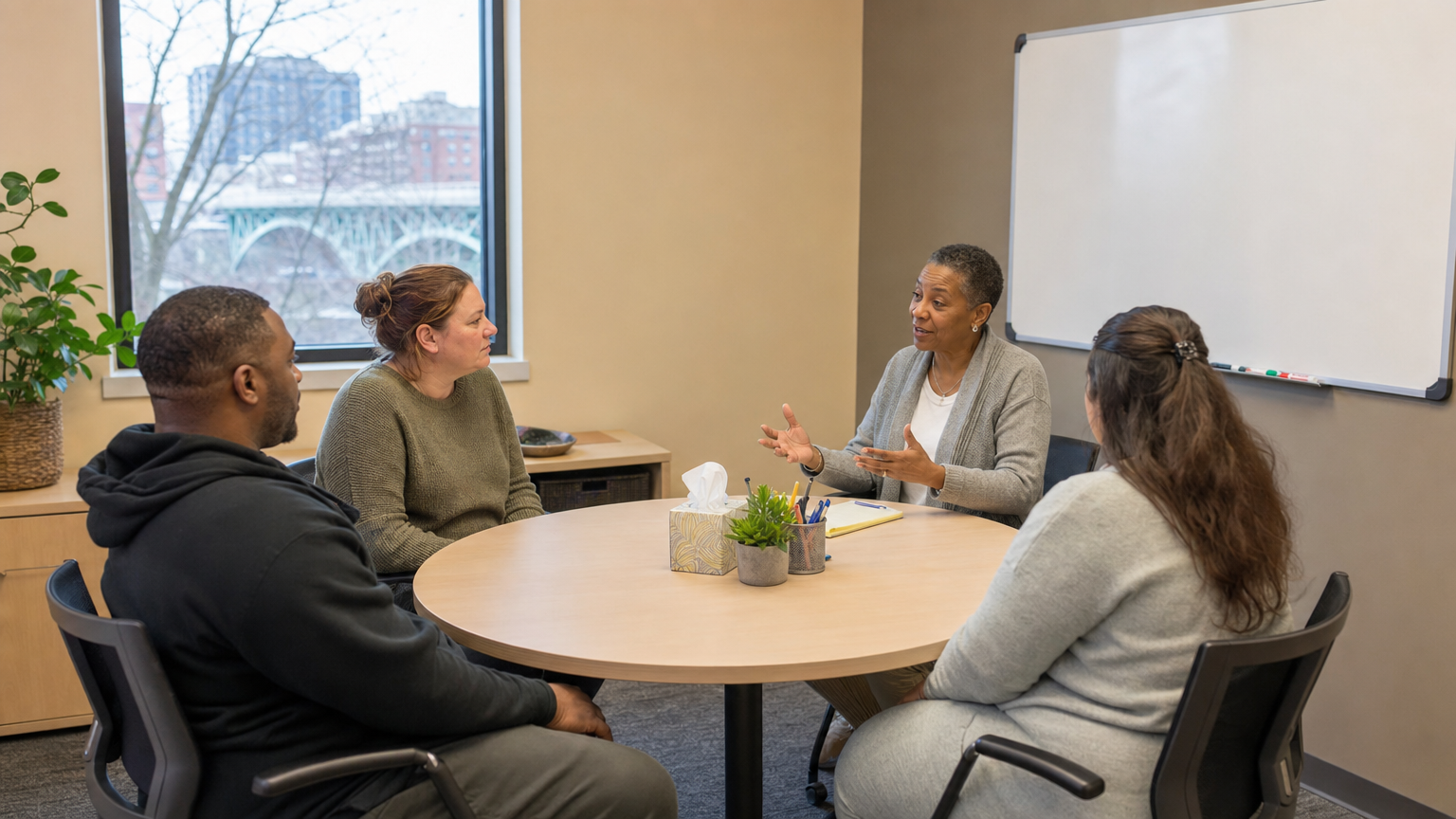
Parenting Solutions of Cincinnati , Interactive Skill‑Building Sessions
Parenting Solutions offers hands‑on sessions that teach conflict‑resolution through games and real‑time feedback. The curriculum follows the evidence‑based model described on Online Parent Class, which stresses skill practice over lecture.
Each class ends with a “home‑practice” worksheet, so you can apply what you learned the next day.
Classes run evenings, making them convenient for working parents.
Limitation: the group size can be as high as 15 families, which may reduce individual attention.
The Co‑Parenting Institute , Online & In‑Person Hybrid Courses
The Institute runs a hybrid model: a self‑paced online core plus live Zoom check‑ins hosted by Ohio State University Extension staff. According to SCP Online, the program teaches parents how to lessen children’s stress during divorce. Reducing a child’s exposure to parental conflict helps preserve the secure attachment relationships that support healthy development (Bowlby, 1988).
Students can pause videos and revisit modules, which is helpful for busy schedules.
Live sessions let you ask questions and get personalized feedback from trained hosts.
One downside: the online portion requires reliable internet, which may be a barrier for some families.
Pro Tip:Ready to build a cooperative family? Try Fostering Growth and Cooperation free → 2‑minute family peace assessment
Cincinnati Child & Family Services , Community‑Focused Parenting Programs
Cincinnati Child & Family Services runs community workshops that partner with local schools and nonprofits. The curriculum emphasizes relationship building and includes a brief mindfulness component.
Because the program is funded by city grants, many sessions are offered at low or no cost.
Facilitators have backgrounds in social work and family systems, which adds a usable perspective.
Limitation: class dates are set far in advance, so you may have to wait for the next enrollment cycle.
Parenting with Less Power Struggles
What to Look For in a Co‑Parenting Class
A good class meets your county’s minimum hours and covers core skills like emotional regulation, active listening, and joint decision‑making. The Online Parenting Programs checklist highlights modules that focus on anger management and high‑conflict dynamics, which are essential for families handling divorce. Addressing the underlying emotional cycles between parents, not just surface behavior, is what tends to shift conflict patterns over time (Johnson, 2019).
Ask whether the instructor holds credentials in family systems or DBT, because those frameworks provide concrete tools rather than vague advice.
Consider format: in‑person groups foster peer support, while online modules give flexibility. Choose the style that fits your schedule and learning preference.
Finally, check if the provider offers follow‑up support, such as booster sessions or a private online community, to keep skills fresh.
Quick Comparison of Cincinnati Co‑Parenting Class Providers
Provider | Format | Key Focus | Cost |
Fostering Growth and Cooperation | Hybrid (in‑person & telehealth) | Emotion regulation, conflict dynamics | — |
Cincinnati Family Mediation Center | In‑person | Mediation, legal basics | — |
Parenting Solutions of Cincinnati | Evening workshops | Interactive skill practice | — |
The Co‑Parenting Institute | Online + live Zoom | Divorce impact reduction | — |
Cincinnati Child & Family Services | Community‑based | Mindfulness, relationship building | Low / free |
FAQ
Do co‑parenting classes work for high‑conflict couples?
Yes. Structured skill‑training can reduce conflict intensity and improve communication, and targeted interventions for high‑conflict separated families are associated with better child outcomes (Lebow et al., 2012; Pruett & Pruett, 2009).
How long are typical co‑parenting classes?
Most programs run 6 to 12 weeks, with each session lasting 1‑2 hours.
Can I join a class if I live outside Cincinnati?
Yes, many providers now offer telehealth or fully online options that work statewide.
Are there any free co‑parenting resources?
Some community agencies, like Cincinnati Child & Family Services, provide low‑cost or free workshops funded by city grants.
What should I bring to my first session?
Bring a notebook, an open mind, and any court‑ordered paperwork if you have it; the facilitator will guide you from there.
Conclusion
Each of the providers covered here brings something useful to Cincinnati families, and the right fit depends on your schedule, budget, and goals. Fostering Growth and Cooperation is one strong, evidence‑based example, grounding its workshops in the Gottman Method and DBT while offering both in‑person and telehealth formats. If that approach resonates with you, you can take the free 2‑minute family peace assessment and schedule a first session.
References
Bowlby, J. (1988).A secure base: Parent-child attachment and healthy human development. Basic Books.
Gottman, J. M., & Silver, N. (2015).The seven principles for making marriage work(Rev. ed.). Harmony Books.
Johnson, S. M. (2019).Attachment theory in practice: Emotionally focused therapy (EFT) with individuals, couples, and families. Guilford Press.
Lebow, J., Chambers, A. L., Christensen, A., & Johnson, S. M. (2012). Research on the treatment of couple distress.Journal of Marital and Family Therapy, 38(1), 145–168.
Pruett, M. K., & Pruett, K. D. (2009).Partnership parenting: How men and women parent differently—why it helps your kids and can strengthen your marriage. Da Capo Lifelong Books.
Further reading:co-parenting classes near me


Comments