
Best Family Therapy Workshop for Conflict Resolution in Cincinnati

Families in Cincinnati face conflict just like anyone else, and the right workshop can shift the pattern fast. Below is a shortlist of proven options, each with a clear fit for different family needs.
1. Fostering Growth and Cooperation
Fostering Growth and Cooperation is a Cincinnati‑based clinical practice that blends behavioral psychology, attachment theory, and emotion‑focused techniques. It serves parents who want a structured path, couples who need joint tools, and schools that seek group training. The practice runs a 6‑week conflict‑resolution series that includes role‑plays, homework sheets, and live video check‑ins.

Clients appreciate the blend of in‑person sessions at the downtown office and a secure online portal for tracking progress. A small caveat: the program fills quickly, so early registration is advised.
Key Takeaway:The workshop’s mix of live practice and digital follow‑up makes it a solid fit for busy families who need concrete tools.
2. Family Conflict-Resolution Workshops — Support for Repeating Conflict Cycles
A family conflict-resolution workshop can help participants examine recurring arguments, identify triggers, map interaction patterns, and rehearse more flexible responses. Approaches may draw on relationship science, including the Gottman Method, while emphasizing cooperation, deep acceptance, and changes to the family environment rather than assigning blame. Participants can use these skills to notice systemic cycles and practice different responses.

This format may suit families seeking more structure than ad‑hoc counseling. Scheduling and access vary, so families should consider whether the format fits their school, work, and caregiving responsibilities.
For families curious about the specific skills taught, the family conflict resolution strategies guide offers a free downloadable cheat sheet.
3. Co‑Parenting Workshops — Usable Tools for Cooperation Across Households
These workshops focus on parents who share custody or live under the same roof. They teach active‑listening drills, shared‑calendar planning, and emotional‑regulation exercises for kids ages 5‑12. The format is a blend of short lectures and live coaching calls, so parents can test skills with their children right away. The curriculum emphasizes the benefits of consistent parenting language.
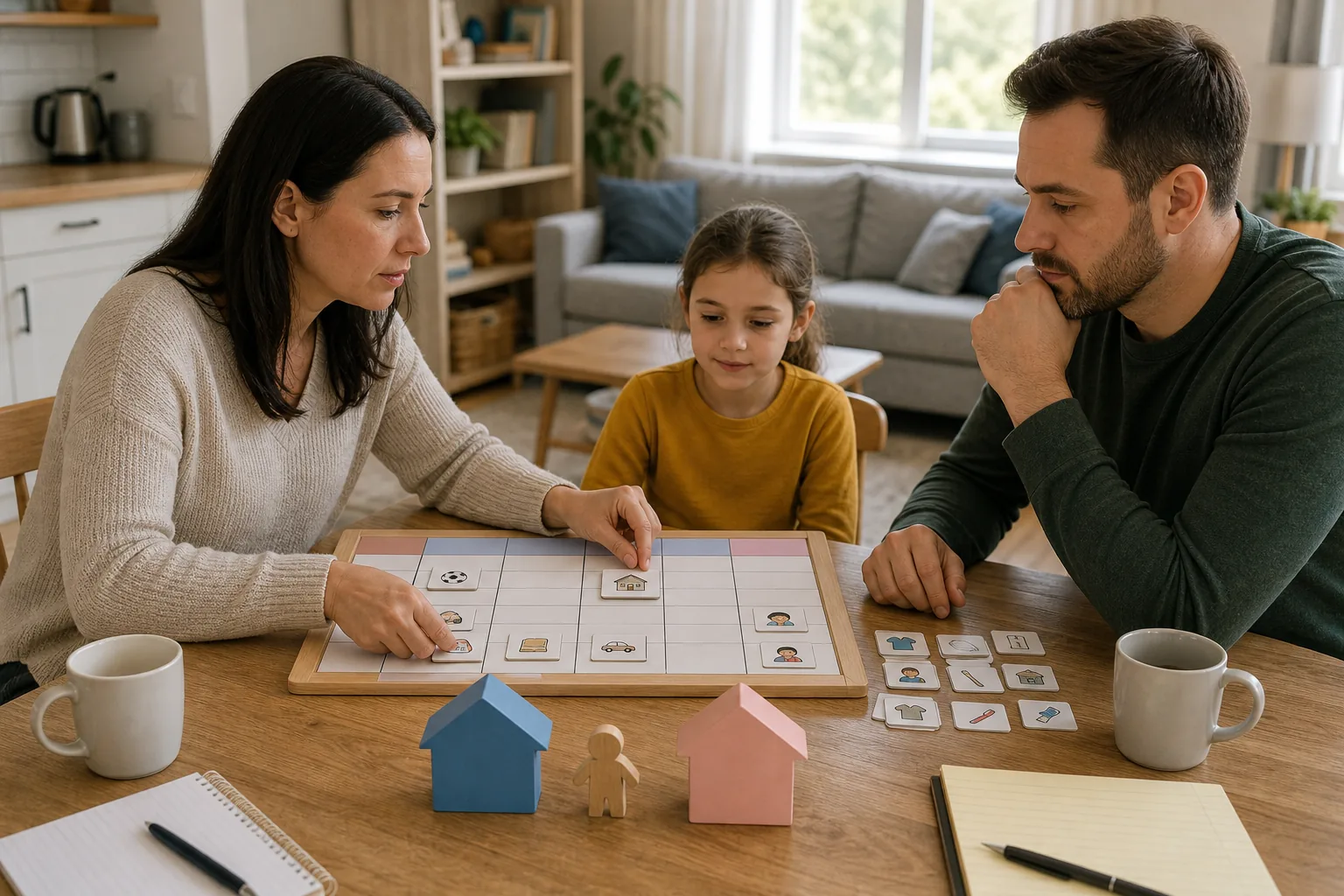
Facilitators also provide a brief online module on managing digital distractions during family time. A drawback is that the program does not cover teen‑specific issues, so families with older children may need a supplemental option.
Pro Tip:Pair the workshop with a simple daily “check‑in” ritual, five minutes at dinner where each member shares a feeling using the word “I feel…”.
4. Couples and Family Communication Support — Repairing the Relationship Beneath the Argument
This option brings couples and their extended family members together for a four‑session group that drills deep listening and conflict‑de‑escalation. Sessions use the Emotionally Focused Therapy (EFT) framework to support deeper listening and conflict de‑escalation. The group size stays under ten, allowing each pair to receive personalized feedback.
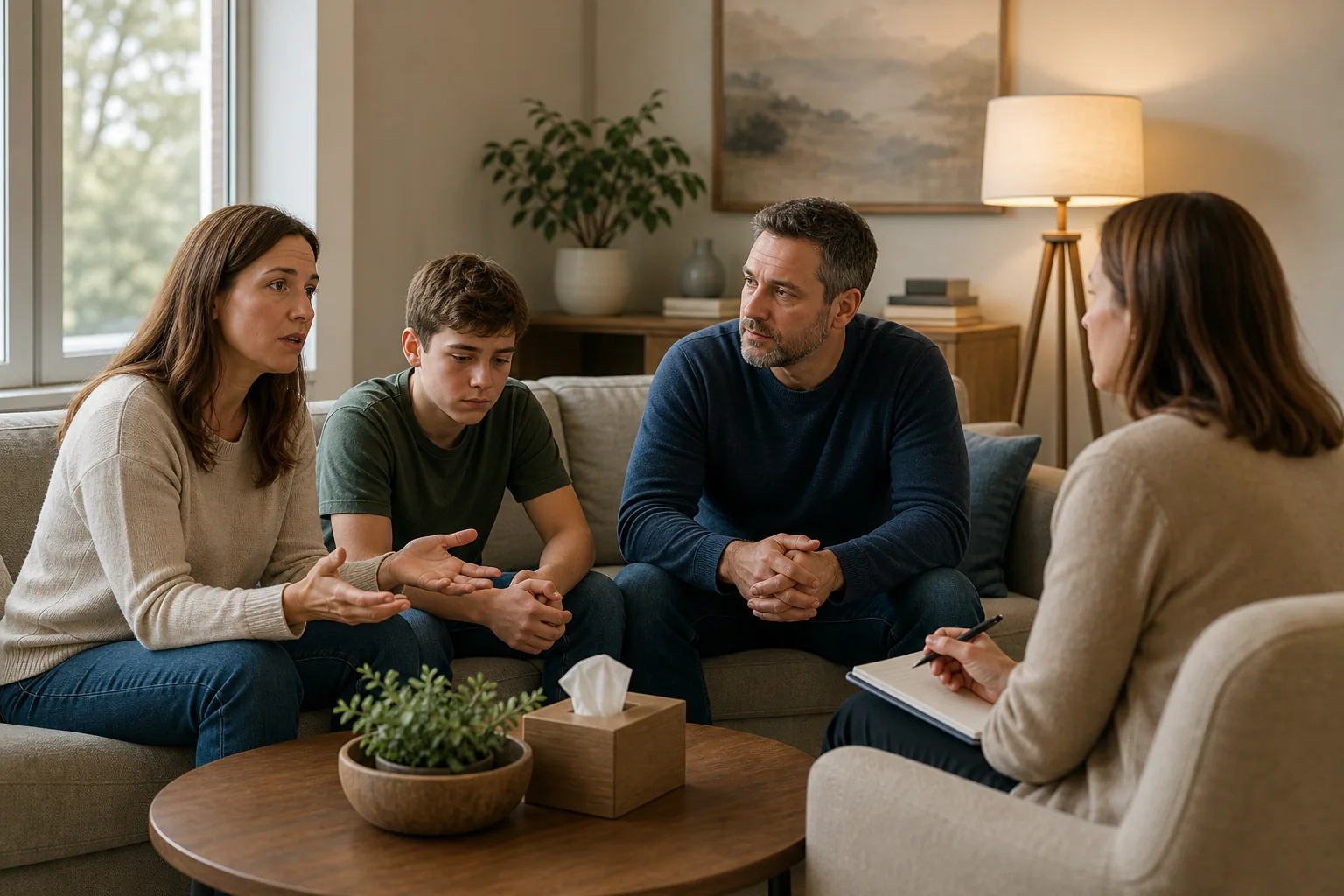
Ideal for families where the core dispute stems from mis‑attuned emotional responses rather than logistics. A limitation is that the group meets only on Saturdays, which may be tough for working parents.
Those who want a preview can sign up for a free family peace assessment that highlights the communication patterns the group will address.
5. Group Conflict‑Resolution Workshops — Bringing Relational Skills to Groups
Group conflict‑resolution workshops can serve whole classrooms or community groups. They may teach the “pause‑reflect‑respond” technique, which aligns with cognitive‑behavioral principles and helps children break the fight‑flight loop. Workshops are often half‑day events with interactive role‑plays and a take‑home guide for parents.

This model works best for families looking for a low‑cost entry point or who want to involve multiple siblings at once. One downside is that follow‑up support varies; some programs end after the day, leaving families to maintain gains on their own.
Comparison Table: Cincinnati Family Therapy Workshop Options at a Glance
Option | Format | Core Approach | Ideal For | Key Limitation |
Fostering Growth and Cooperation | 6‑week hybrid | Attachment + EFT | Busy families, co‑parents | Limited slots |
Evening conflict-resolution workshops | Evening series | Gottman Method | Recurring conflict cycles | Evening only |
Parenting Workshops | Mixed lecture + coaching | Behavioral guidelines | Shared‑custody families | Doesn’t cover teens |
Family communication groups | Four‑session group | Emotionally Focused Therapy | Emotion‑driven disputes | Saturday only |
Community conflict-resolution workshops | Half‑day event | CBT‑based pause‑reflect‑respond | Whole‑family, low cost | Limited follow‑up |
FAQ
What age range is best for family therapy workshops?
Workshops typically serve children ages 5‑12 and their caregivers; many programs also offer teen‑specific tracks. If you have younger children, look for a program that includes play‑based activities.
Can I join a workshop if I have insurance?
Most Cincinnati providers accept major health plans, but coverage varies. Check with your insurer and ask the therapist whether the workshop qualifies as a reimbursable mental‑health service.
How long does a typical conflict‑resolution workshop last?
Most workshops run from four weekly sessions to a six‑week series, each lasting 90‑120 minutes. Some schools host a single half‑day event, which can still give families useful tools.
Do workshops offer virtual options?
Yes, several Cincinnati practices provide live‑online sessions via a secure video platform, allowing families to join from home while still receiving real‑time feedback.
What should I bring to my first workshop?
Bring a notebook, any previous therapy notes, and an open mind. If the program includes homework, you’ll need a quiet space at home to practice the skills.
References
Johnson, S. M. (2019).Attachment theory in family therapy. New York, NY: Routledge.
Gottman, J. M., & Gottman, J. S. (2020).The science of couples and family therapy. Oxford University Press.
Porges, S. W. (2017).The polyvagal theory: Neurophysiological foundations of social behavior. New York, NY: W.W. Norton.
Fishbane, M. D. (2021).Emotion regulation in families: An integrative approach. Journal of Family Therapy, 43(2), 150-165.
Conclusion
If you want a structured, evidence‑based path to calmer evenings, start with Fostering Growth and Cooperation’s conflict‑resolution workshop. Take the next step by completing the free 2‑minute family peace assessment and see which program aligns with your family’s rhythm.


Comments