
Best Ways to Handle Teenage Outbursts

Teenage outbursts can feel sudden, but they usually have a pattern. Anger may sit on top of hurt, fear, shame, stress, or a need to feel heard. Here are 10 support options, with clear guidance on who each may help and where each approach has limits.
Face-to-face therapy isn't the only path. Online care and structured parent programs can help too. The right choice depends on the teen's age, setting, safety needs, and the family pattern around the outburst.
1. Fostering Growth and Cooperation, Family Therapy for Recurring Conflict Cycles
Fostering Growth and Cooperation is a Cincinnati-based clinical psychology practice that helps families examine conflict dynamics instead of blaming one person. It fits families who keep having the same argument, even after everyone promises to try harder.

Family therapy can bring the cycle into view. One person raises their voice, another withdraws, and the first person gets louder. The work then shifts toward emotional regulation, meaning the ability to manage feelings in real time, plus safer ways to ask for change.
The practice uses family systems work alongside CBT and DBT-informed skills. Families can access in-person therapy, online programs, or workshops. That range matters when a parent travels, a teen refuses an office visit, or several caregivers need the same plan.
It won't replace urgent safety care when someone faces immediate danger. Still, for repeated arguments and strained trust, this is a supportive, effective way to study the whole system.
2. Parent Management Training, Consistent Reinforcement and Nonviolent Consequences
Parent Management Training, or PMT, is for caregivers who need a steady response plan when a teen breaks rules or acts aggressively. It focuses on positive reinforcement and natural, nonviolent consequences.

The aim is to stop the home from becoming a contest of wills. A parent might praise a calm request right away, then apply a known consequence when a limit is crossed. The response stays brief and predictable.
PMT has a medium effect size for reducing antisocial behavior, though gains may fade within 12 months after training stops.
PMT works best when caregivers can practice the same plan across homes. It may fit a family that needs structure more than insight, but it should still leave room for the teen's feelings and point of view.
3. Functional Family Therapy, Addressing Family Patterns Behind Aggression
Functional Family Therapy looks at home factors that may contribute to aggression. It suits families who see outbursts as part of a larger pattern involving blame, distance, or repeated misreadings.

The therapist works with the family rather than treating the teen as the sole problem. A sharp comment may trigger a parent's alarm. That alarm may lead to a lecture, which the teen hears as rejection. The next outburst then becomes more likely.
The useful question is, “What happens just before the blowup, and what happens right after it?” Mapping that sequence can reveal where a family has a chance to respond differently.
This approach may feel slow when a parent wants an immediate behavior fix. It is better suited to families willing to examine their own part in the cycle.
4. Brief Strategic Family Therapy, Changing Interactional Patterns at Home
Brief Strategic Family Therapy targets interaction patterns that keep conflict going. It can help when a teen's anger is tied to alliances, mixed messages, or unclear authority at home.

For example, one caregiver may set a limit while another quietly removes it. The teen learns that pushing harder changes the outcome. A strategic family approach helps caregivers align their words with their actions.
The focus stays on the present pattern and the next useful change. Parents may practice a shorter instruction, a calmer tone, or a planned pause before responding. The goal is cooperation, not forced obedience.
“Brief” doesn't mean every family will finish quickly. Complex trauma, safety risks, or long-standing distrust may need broader care.
5. Anger Management Training, CBT Skills for Pausing and Problem-Solving
CBT-based Anger Management Training fits teens who can notice anger but act before they can think. It teaches problem-solving and perspective-taking rather than asking the teen to suppress anger.
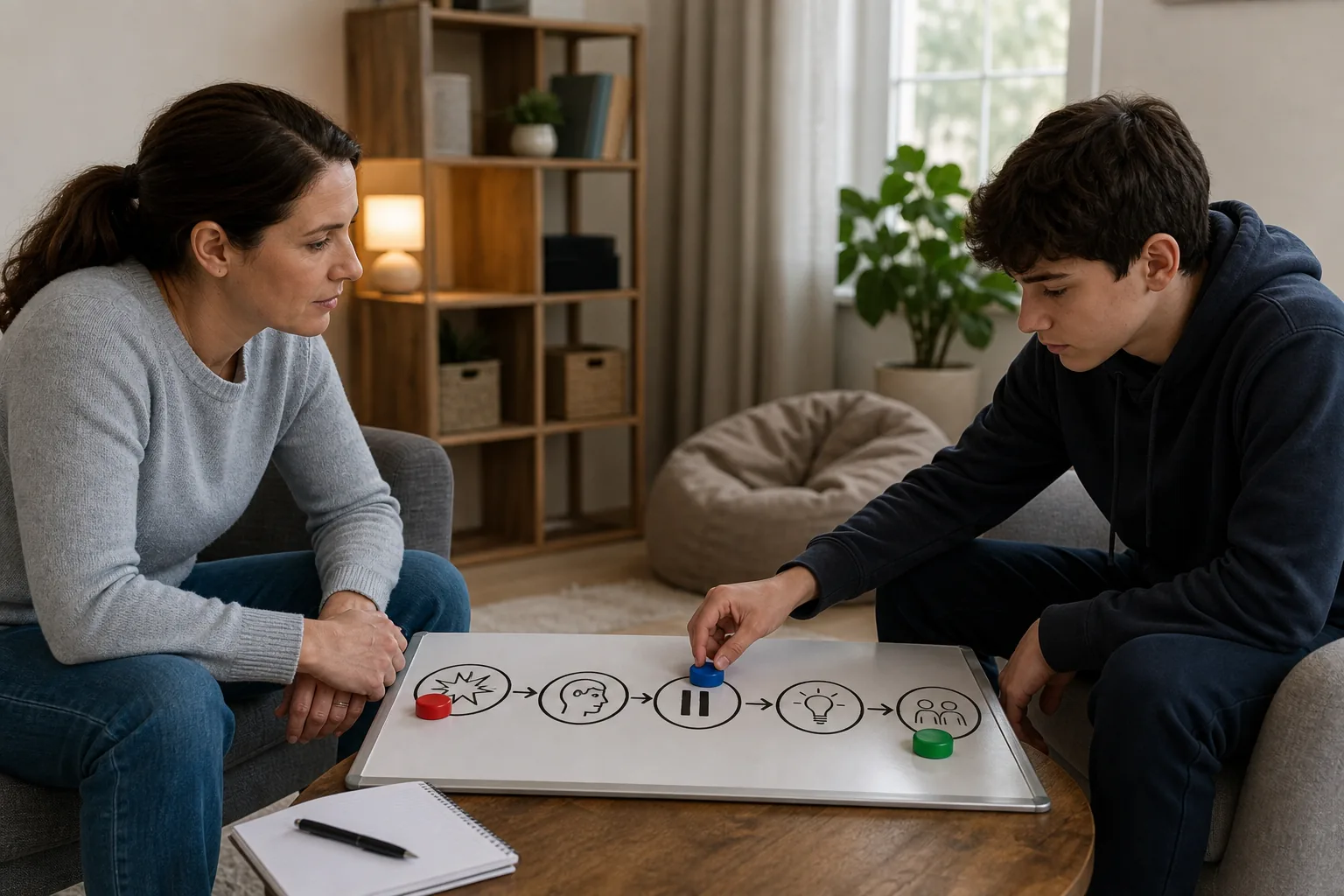
A useful practice is a body map. The teen marks early signs such as a tight jaw, hot face, fast thoughts, or clenched hands. Those signs become an early warning system. The teen can then pause, breathe slowly, leave the room with permission, or name the problem.
Another tool is an anger iceberg. The visible anger may hide hurt, an unmet need, or fear. Asking “What did this moment seem to mean about you?” can lead to a better answer than “Why are you acting this way?”
The approach needs practice outside the crisis. A worksheet completed during a calm hour won't help much if the family never rehearses the plan.
6. Online Parent Management Training, Flexible Coaching for Calmer Responses
Online Parent Management Training gives caregivers access to PMT skills without regular office visits. It may suit families with transport limits, split households, or schedules that make weekly therapy hard.

The documented approach uses positive reinforcement, natural nonviolent consequences, and communication improvement. Online PMT was noninferior to standard PMT for its studied outcomes.
Online care still needs active practice. Parents may watch a lesson and understand it, then lose their plan during a 10 p.m. argument. A written script helps: “I hear that you're angry. We can talk when voices are safe. The rule still stands.”
Remote support may not fit a family facing immediate violence or a teen who cannot engage through a screen. In those cases, a clinician should help set the level of care.
Key Takeaway:A calm limit works best when the family has agreed on it before the next outburst.
7. Coping Power, Parent-Involved Anger Regulation Across Settings
Coping Power is designed for anger management across more than one setting. It may fit a teen whose outbursts show up at home, school, or during contact with peers.

The program uses multiple formats and includes parent involvement. That can help connect the skills taught in one place with the situations that trigger anger elsewhere.
A teen might practice spotting a hostile thought in a session, then use the skill after a hard exchange at school. Parents can ask what happened without turning the question into an interrogation.
The trade-off is coordination. Programs that involve several settings need time from caregivers and other adults. If the adults cannot share a plan, progress may be uneven.
8. Incredible Years, Building Problem-Solving and Relationship Skills
Incredible Years offers parent programs for children from infancy through age 12, including a school-age program for ages 6–12. Its published parent-program age range does not cover teenagers, so it should not be presented as a general teen intervention (The Incredible Years, n.d.).

Its parenting, child, and teacher resources may be relevant to families with younger children. For a teenager, ask a qualified professional for a program designed and evaluated for that age group.
Do not assume that evidence for a program in younger children also establishes effectiveness for teenagers.
Reference: The Incredible Years. (n.d.). The Incredible Years series evidence-based parenting programs.
9. Good Behavior Game, Structured Support Across School and Peer Contexts
The Good Behavior Game uses structured education and teacher tools to support school performance, peer relationships, and problem-solving. It fits concerns that appear in classrooms or group settings.
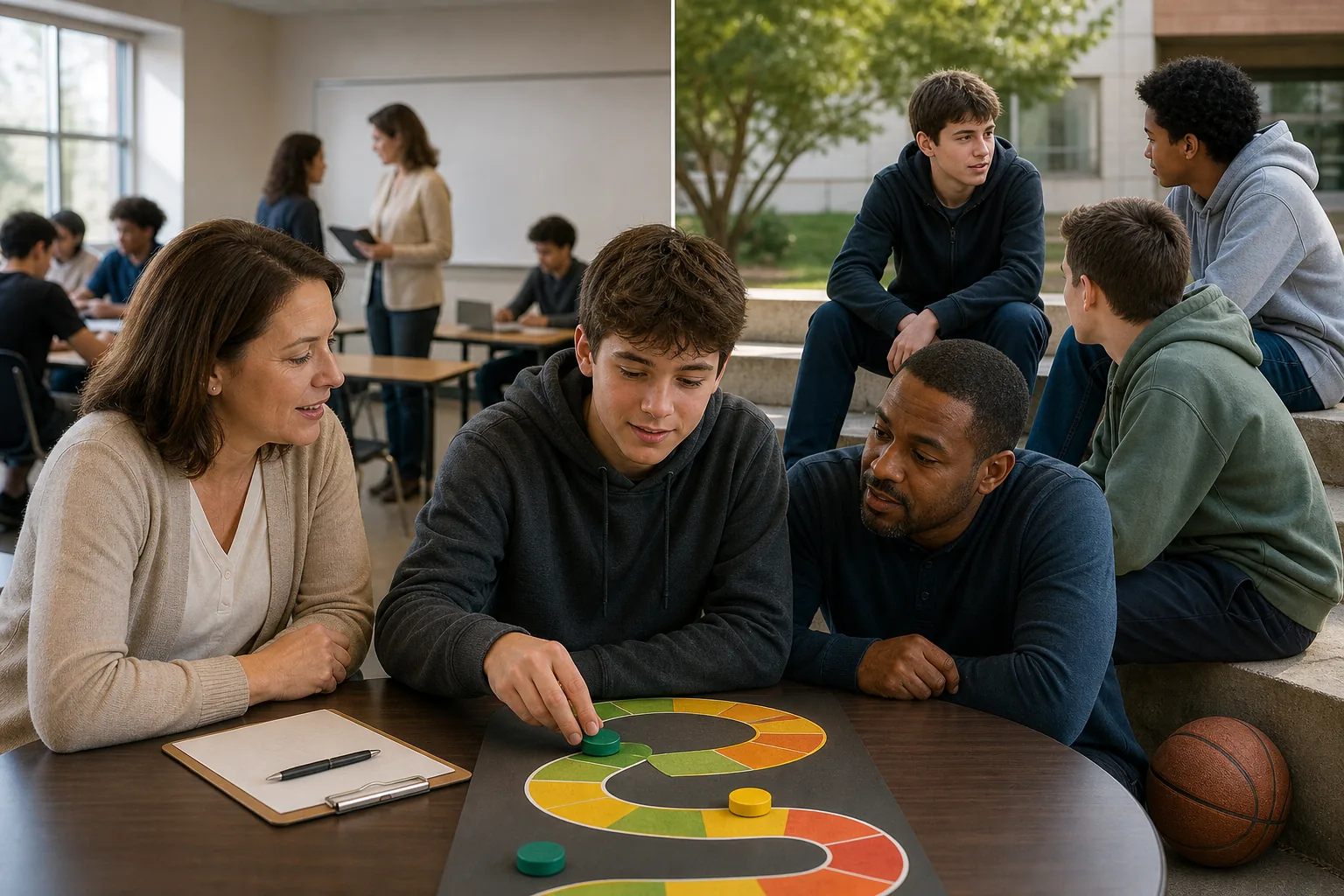
Its strength is the shared environment. Adults can define expected behavior before a conflict, notice small signs of escalation, and reinforce a better choice. That is different from waiting until a teen is already shouting.
Parents may need to pair school support with home work. A game or classroom plan cannot address grief, family rupture, or fear that sits beneath anger.
Ask whether the school can communicate with caregivers within its privacy rules. Without that bridge, the teen may receive two unrelated plans.
10. Family-Based Support for Anger Problems
Family-based support can look at the relationship patterns beneath an argument. It may fit families where a teen's anger seems tied to rejection, shame, fear of abandonment, or a long fight to feel understood.

Looking at relationship patterns does not excuse threats or harm. It helps explain why a small event can feel huge. A missed text may touch an old fear of being forgotten. A correction may feel like proof that the teen is seen as a failure.
Therapy can help the parent lead with validation before setting a limit: “I get why that felt unfair. I won't let you insult your sister.” Both parts matter. Acceptance without limits is unclear. Limits without connection can deepen the fight.
This approach may take patience. It is not a quick script for stopping every outburst, but it can help families repair trust over time.
Compare the 10 Options for Handling Teenage Outbursts
These options differ by setting, delivery mode, and the main problem they address. Use the table to narrow the field, then discuss the choice with a qualified clinician or school team.
Option | Useful when | Main focus | Watch for |
Fostering Growth and Cooperation | Recurring family conflict | Family systems, CBT, DBT-informed skills | Needs active family participation |
Parent Management Training | Inconsistent home limits | Reinforcement and consequences | Effects may fade after training ends |
Functional Family Therapy | Aggression tied to home patterns | Family interaction cycles | May take time to shift habits |
Brief Strategic Family Therapy | Mixed messages at home | Present interaction patterns | Complex needs may require more care |
Anger Management Training | Fast escalation in the teen | CBT, pausing, perspective-taking | Skills need repeated practice |
Online Parent Management Training | Remote access is needed | Parent coaching | May not fit immediate safety risks |
Coping Power | Anger across settings | Parent-involved regulation | Requires coordination |
Incredible Years | Parent programs for children through age 12 | Parenting and school-support resources | Published parent-program age range does not cover teenagers |
Good Behavior Game | Classroom behavior concerns | Teacher-led structure | Needs a home bridge |
Family-based intervention | Aggression linked to home factors | Identifying home factors contributing to aggression | Discuss fit with a qualified clinician |
Families can begin with a short review of the pattern: what happened before the outburst, what each person felt, and what followed. A free family peace assessment can help identify the next conversation.
FAQ
How do I handle a teenager who is yelling at me?
Start by lowering your voice and setting one clear safety limit. Say, “I want to hear you, but I won't stay while you threaten or insult me.” Give space when needed, then return to the issue after everyone is calmer. Handling teenage outbursts works better when validation and boundaries appear together.
What is underneath a teenager's anger?
Teen anger can cover hurt, fear, shame, stress, or an unmet need for respect. Ask what the event meant to the teen rather than focusing only on the behavior. The iceberg exercise can help separate the trigger from the feeling below it. Repeated or severe outbursts may need family counseling.
Should I punish a teenager who does not care about consequences?
Use fewer, clearer consequences instead of escalating punishment. A consequence should connect to the behavior and be applied calmly. If a teen seems indifferent, focus first on connection, skill teaching, and the home pattern. Handling teenage outbursts through power struggles often makes both sides dig in.
Can breathing help during a teenage outburst?
Breathing can help when the teen notices early body signs and agrees to practice it before a crisis. Try a slow exhale that lasts longer than the inhale for several rounds. Don't demand breathing as a way to dismiss anger. Pair the skill with a pause, space, and a later problem-solving talk.
When should I seek professional help for teen anger?
Seek professional help when outbursts are frequent, severe, hard to predict, or linked with threats, injury, property damage, school loss, or major family distress. Immediate danger needs urgent local support. For ongoing conflict, family support and guided practice can help clarify the next step without treating the teen as the only problem.
Conclusion
Start with the approach that matches the pattern, not the loudest moment. For recurring family conflict, Fostering Growth and Cooperation can help you examine the cycle, build emotional regulation skills, and set limits with care. Begin with the family peace assessment, then bring what you notice into a therapy or parent-support conversation.
References
Johnson, S. M. (2019).Attachment theory in practice: EFT with individuals, couples, and families. Guilford Press.
Linehan, M. M. (2015).DBT skills training manual(2nd ed.). Guilford Press.
Minuchin, S. (1974).Families and family therapy. Harvard University Press.


Comments