
Cincinnati Family Counseling Options

Finding the right family counselor can feel hard when everyone is upset, tired, or pulling in a different direction. Cincinnati families can choose among relationship-focused practices, child and adolescent services, hospital programs, community care, and telehealth. Here are useful options by need, with clear questions to ask before you begin.
1. Fostering Growth and Cooperation, relationship-centered counseling for Cincinnati families
Fostering Growth and Cooperation is a Cincinnati-based clinical psychology practice for families, couples, parents, co-parents, and adults facing anxiety, anger, or emotional regulation concerns.
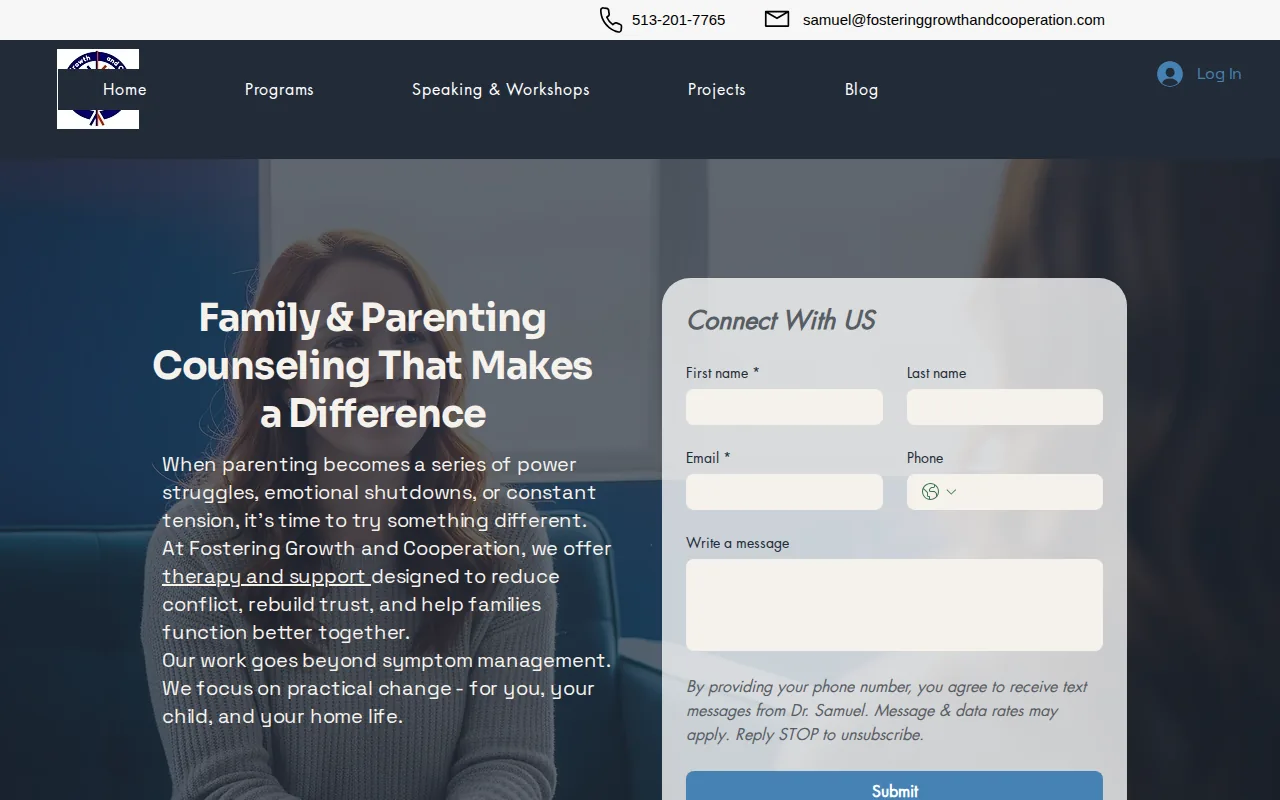
We use research-backed methods from behavioral psychology and applied social science. Depending on the concern, that may include family systems work, Emotionally Focused Therapy, the Gottman Method, DBT, ACT, or exposure-based care. The goal is to see the cycle around the problem, rather than blame one person for it.
That lens fits families stuck in repeat fights. One person pushes for change. Another shuts down. A child may then act out, which raises the pressure for everyone. Therapy can slow that loop and build better ways to respond.
Fostering Growth and Cooperation also provides online counseling, workshops, and group support. Dr. Samuel Eshleman Latimer brings clinical psychology training to work with relationship patterns, emotional regulation, and conflict dynamics.
For a family-focused overview of formats, insurance questions, and telehealth access, visit our family counseling and therapy page . A free family peace assessment can help you name the pattern before you schedule.
2. Behavioral and developmental family support
Families seeking Cincinnati family counseling for behavioral or developmental concerns may need care that includes parent coaching and coordination beyond a weekly talk session.
Ask whether the provider works with the child alone, with parents, or with the whole family. That choice changes the work. A child may learn a coping skill, but the home must also support that skill when stress rises.
Good questions include: How are goals set? Will parents receive feedback? Can the clinician coordinate with a school or other care team when consent allows? What happens if the family needs help with routines, safety, or community resources?
A behavioral focus can help when anxiety, depression, high-risk behavior, or substance use affects the home. It should still leave room for the child’s voice and family culture.
The limitation is fit. A program built for developmental needs may not be the right match for couples conflict or a custody transition. Ask about the provider’s main population before booking.
3. Outpatient family and couples counseling
Outpatient counseling gives Cincinnati families a regular place to work on communication, parenting strain, grief, anxiety, or relationship conflict.
This format often works well when people are safe enough to meet together and can attend sessions with some consistency. A therapist may begin with separate conversations, then bring family members into conjoint work, meaning sessions held with more than one person.
Ask how the therapist handles privacy when a parent, child, or partner shares something alone. Ask how progress is tracked. Clear goals might include fewer hostile exchanges at home, a calmer bedtime routine, or a plan for discussing money without leaving the room.
Outpatient care may not fit an active crisis, severe withdrawal, or immediate danger. In those cases, ask the provider what level of care is needed instead of trying to force family therapy to carry the whole burden.
4. Child and adolescent counseling with family involvement
Child and adolescent counseling can help when a young person’s anxiety, sadness, anger, or risky behavior affects the whole household.
Parents should ask how much family involvement is part of the plan. A private space for a teen matters, but so does teaching adults how to respond at home. The work may include emotional regulation, peer pressure, school stress, or a stronger sense of self.
Family systems thinking treats the child’s behavior as information about the wider pattern. That does not mean parents caused every problem. It means the home can become part of the change plan.
Look for a clinician who can explain confidentiality in plain language. Teens need to know what stays private and what must be shared for safety. Parents need to know how they will take part without turning each session into an interrogation.
5. Hospital-based behavioral medicine
Hospital-based behavioral medicine may suit families facing complex child or adolescent concerns that need a higher level of assessment or medical coordination.
Cincinnati is in Hamilton County and sits near the Ohio River, across from Kentucky, making the area part of a wider tri-state care network. Cincinnati’s city profile provides background on that regional setting.
Ask whether the program treats the whole family, the child alone, or both. Also ask how referrals work, which records are needed, and whether follow-up care continues after an evaluation.
Hospital care can bring useful coordination for complex cases. It may also involve longer wait times, stricter referral rules, or a setting that feels less personal. Families should ask about the next step before the first visit ends.
6. Community-based mental-health care
Community-based care can be a strong fit when a family needs counseling plus help with access, case management, or support groups.
Some families need more than insight. They may need help finding housing support, arranging school services, reaching substance-use care, or building a safer home routine. Ask whether the provider has care navigators or can connect you with local resources.
Trauma-informed care should account for the effects of past harm without treating a person as damaged. It may include safety planning, emotional regulation skills, and attention to family culture. In the home, safety can also mean secure firearm storage, a substance-free space during care, and a plan for moments of escalation.
Community programs may have eligibility limits tied to county, income, insurance, or referral source. Check those rules early. A program that cannot accept your case is not a judgment about your family.
7. Flexible therapy access for families and couples
Flexible therapy can help families who struggle to attend the same office at the same time. Online counseling may work for couples in different locations or parents with demanding schedules.
Before choosing telehealth, confirm that each participant has a private place to talk. Set a plan for what happens if someone leaves the call, the connection drops, or conflict becomes too intense.
Ask about the clinician’s license and authorization to practice where each person is located. Cross-state rules can affect online family counseling. Insurance plans may also treat video visits differently from office visits.
Telehealth is not ideal for every family. A crowded home, unsafe partner, weak internet connection, or lack of privacy can limit the work. In-person care may be the better choice when the setting itself needs support.
8. LGBTQ+-affirming family therapists
LGBTQ+-affirming family therapy gives families a place to address identity, belonging, pronouns, faith tension, rejection, or conflict without asking one person to defend their right to exist.
Ask the therapist how they use names and pronouns in records. Ask how they handle a parent who is unsure, a partner who feels left behind, or a young person who fears being outed.
Affirming care does not mean every person must agree before therapy can start. It means the clinician protects dignity while helping the family discuss fear, grief, values, and behavior.
Searchers can use local directories and community referrals, but a profile alone cannot show clinical fit. A short consultation can reveal whether the therapist speaks clearly about identity and family safety. Cincinnati’s wider civic and cultural setting can provide context for family life through a local regional resource , though the provider still needs to explain its own approach.
9. Co-parenting and reunification specialists
Co-parenting counseling helps separated parents reduce conflict around schedules, rules, school choices, and messages between homes.
Reunification work may need a careful pace. The therapist may focus first on safety and trust, then on contact, shared routines, or repair. Ask whether the clinician has experience with custody transitions and whether the work is therapeutic, court-related, or both.
A useful plan names what adults will do when a child carries a message between homes. It also sets rules for texts, handoffs, missed visits, and new partners. The aim is cooperation, not forced closeness.
Therapy cannot replace legal advice or a court order. If those issues overlap, ask how the provider keeps clinical care separate from legal decisions.
10. Online family counseling providers
Online family counseling can make care possible when relatives live in different cities or one person cannot travel easily.
Start by checking where the provider is licensed. Then ask how many people can join one session, how consent is handled, and whether the provider can work with a family member who lives across a state line.
Online care works best when the family agrees on basic session rules. Each person needs a private space, a charged device, and a way to pause if emotions spike. Children may need a parent nearby without sitting in the session.
Cost and insurance vary. Ask about deductibles, out-of-network reimbursement, HSA or FSA use, and any session limits before you commit.
How these Cincinnati family counseling options compare
The right option depends on the problem, the level of risk, and how many family members can take part.
Family need | Useful starting point | Question to ask |
Recurring couple conflict | Relationship-centered counseling | How will you map our conflict cycle? |
Teen anxiety or risky behavior | Adolescent care with parent work | How will parents take part? |
Custody transition | Co-parenting or reunification care | Is the work therapeutic or court-related? |
Substance-use concerns | Community or coordinated behavioral care | What support exists outside sessions? |
Family members in different places | Licensed telehealth care | Can you treat everyone where they live? |
Immediate danger | Emergency or higher-level care | What should we do right now? |
What to ask before you start
Use the first call to test fit, not to tell your whole life story. Ask about training, approach, session format, privacy, cost, insurance, and the provider’s work with your specific family concern.
What pattern do you think we should work on first?
Will sessions include parents, partners, children, or separate meetings?
How do you handle safety concerns?
What does progress look like after the first few sessions?
Do you offer in-person care, telehealth, workshops, or groups?
Fostering Growth and Cooperation uses a collaborative approach. If you want a focused next step, take the free two-minute family peace assessment before reaching out.
FAQ
What does family counseling help with?
Family counseling helps people change repeated patterns that keep conflict going. Cincinnati family counseling may address communication, parenting strain, anxiety, depression, trauma, grief, substance use, or couple conflict. The therapist may meet with everyone together, work with one person inside the family system, or switch between formats as goals change.
How much does family counseling cost in Cincinnati?
Family counseling costs vary by provider, insurance plan, session length, and whether care is in network. Ask about the self-pay rate, deductible, copay, out-of-network forms, HSA or FSA use, and any session limits. Request the exact billing information before your first appointment.
Can family counseling be done online?
Yes, online family counseling can work when each person has privacy and the therapist is authorized to practice where each person lives. Ask how many people may join, what happens if conflict escalates, and whether the provider can continue care after a move. Telehealth is not a fit for every home or crisis.
Should children attend family counseling?
Children should attend when their age, safety, and treatment goals make their involvement useful. Cincinnati family counseling may include a child for part of a session, meet with parents alone, or use a child-focused format. Ask how the therapist protects the child’s privacy while keeping parents informed about safety and progress.
What credentials should a family therapist have?
Look for a current state license and training that matches your concern. Depending on the case, that may include family systems therapy, Emotionally Focused Therapy, the Gottman Method, DBT, or trauma-focused care. Ask how often the clinician uses that approach and how it will shape your sessions.
Conclusion
Choose the option that matches your family’s main problem, safety needs, and ability to attend. For relationship conflict, parenting strain, anxiety, or co-parenting stress, Fostering Growth and Cooperation is a supportive place to begin. Take the free assessment, write down your goals, and use the first consultation to ask direct questions about fit.
References
Johnson, S. M. (2019).Attachment theory in practice: EFT with individuals, couples, and families. Guilford Press.
Gottman, J. M., & Gottman, J. S. (2015).10 principles for doing effective couples therapy. W. W. Norton.
Minuchin, S. (1974).Families and family therapy. Harvard University Press.
Linehan, M. M. (2015).DBT skills training manual. Guilford Press.



Comments