
Evidence Based Family Cooperation Exercises: A Guide
Families often wonder if the "evidence‑based" label really means anything. Here’s a step‑by‑step guide that shows you how to turn research‑backed ideas into everyday cooperation.
Step 1: Create Safety Before Asking for Cooperation
Safety is the foundation of any cooperative cycle. When each member feels heard and respected, the brain shifts from threat mode to problem‑solving mode. A sense of safety can make it easier to engage in joint tasks.
Start by setting a physical and emotional tone. Choose a quiet spot, turn off distractions, and agree on a simple signal, like a raised hand, that means “let's pause.” This signal tells the nervous system it’s okay to lower its alarm level.
Next, ask each person to share one positive observation about the other before any problem is raised. The brief compliment rewires the brain toward connection.
Finally, agree on a neutral language rule: no blaming, no “always/never” statements. Keep statements factual and present‑oriented.
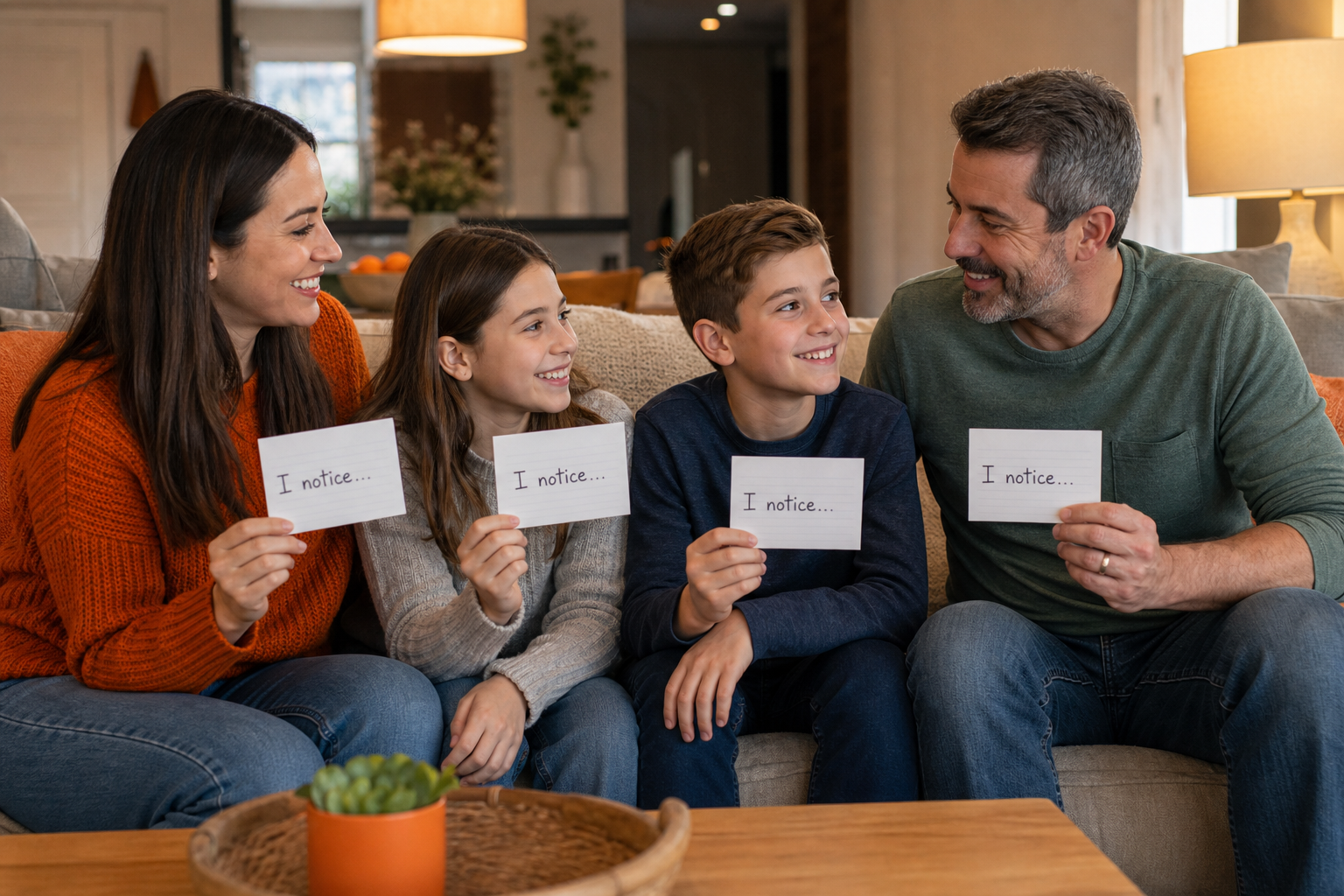
By now you should have a clear, low‑stress space where everyone trusts the process.
Step 2: Map the Cooperation Cycle Instead of Blaming a Person
Turn the conflict into a visual map. Draw a simple loop on a piece of paper: Trigger → Reaction → Request → Response → Outcome. Label each segment with what actually happened, not who caused it.
When you step back from blame, the family can see patterns. For example, a teen’s frustration may trigger a parent’s “quick fix” response, which then fuels more teen resistance. Seeing the loop helps all members spot the exact spot where the cycle can be broken.
Use the free family peace assessment to identify your most common trigger. The assessment provides a short report that highlights where your cycle repeats.
Mark the map with a question mark at the point you want to change. This small visual cue guides the next steps without accusing anyone.
By now you should have a shared diagram that shows where the cycle repeats.
Step 3: Practice Attunement Through Stress Sharing and Reflective Listening
Attunement means tuning into each other's emotional state. Begin with a 5‑minute “stress share.” One person talks about a current stressor while the other listens without offering solutions.
After the speaker finishes, the listener repeats back what was heard using phrases like, “What I hear is…”. This reflective step confirms that the speaker felt understood.
Swap roles. When both members practice this, the family builds a habit of emotional safety.
Structured listening can reduce defensive reactions and support connection. You can read more about the method on Wikipedia .
Try it at dinner three nights in a row. Notice how the conversation stays calmer.
By now you should have a routine where each person feels truly heard.
For a deeper look at attunement tools, explore the Free Trial Family program . It offers video demos and worksheets that model the skill.
Step 4: Turn Emotions Into Clear, Non‑Defensive Requests
When emotions run high, the brain looks for quick fixes. Instead of reacting, pause and name the feeling, then frame a request that does not blame.
Use the "I‑feel" formula: “I feel ___ when ___ because ___; I would like ___.” This structure separates the emotion from the behavior and offers a concrete ask.
Communication exercises in family therapy often use this format to help break cycles of criticism.
Practice with a low‑stakes request first, like asking a sibling to pass the remote. Once the pattern feels natural, move to more sensitive topics.
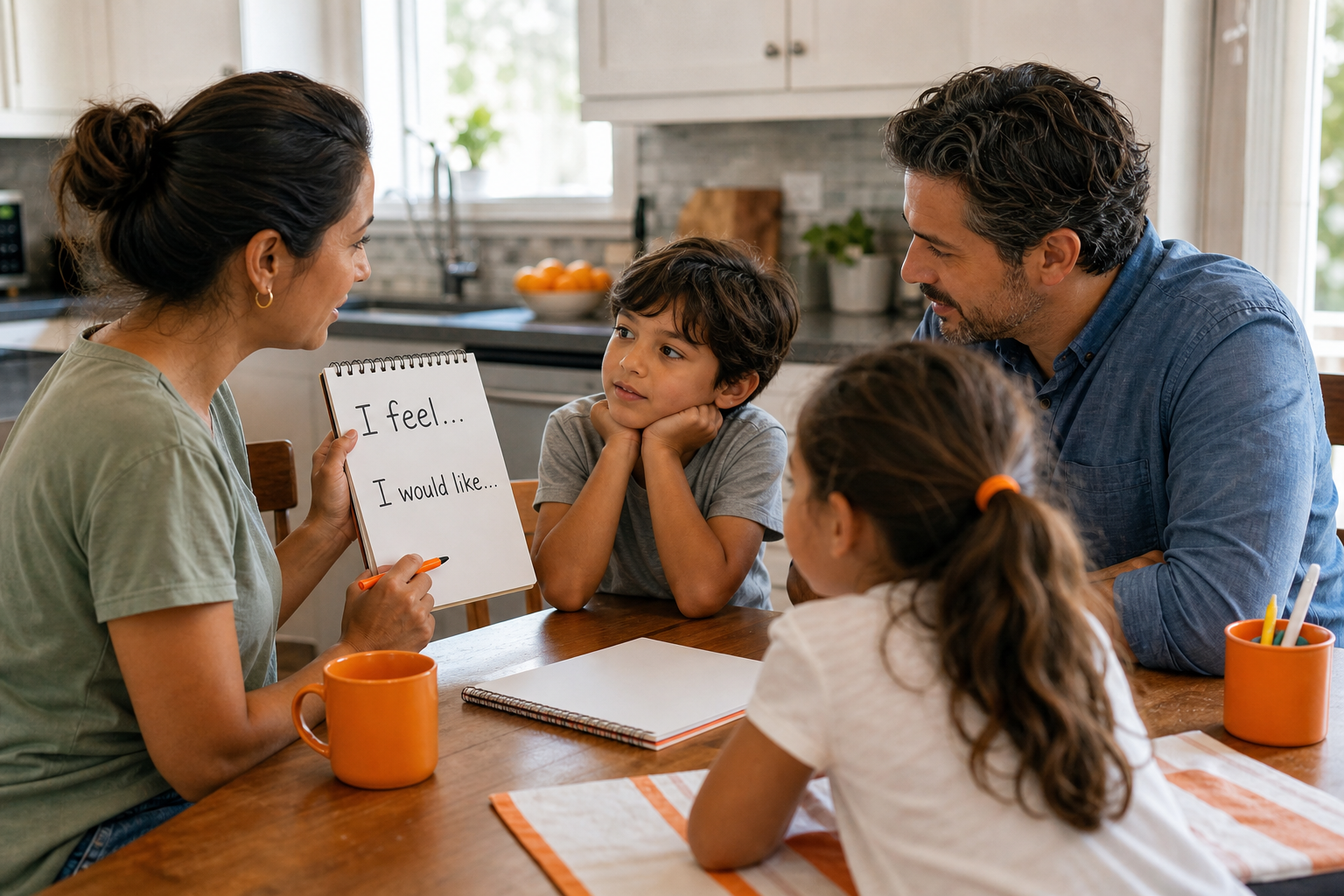
By now you should be able to voice needs without triggering defensiveness.
Step 5: Build Cooperation Into Daily Routines and Review What Works
Consistency turns a skill into a habit. Choose a daily anchor, like morning breakfast or bedtime, and embed a brief cooperation check‑in.
During the check‑in, each person shares one thing that went well and one small tweak for tomorrow. Keep it under five minutes so it feels like a habit, not a chore.
Every week, set aside ten minutes to review the cooperation map from Step 2. Ask: which loop broke? Which new pattern emerged?
Tracking progress gives the brain evidence that change is possible, reinforcing motivation.
For families looking for a structured program, the Parenting with Less Power Struggles Hub offers guided video modules and printable logs.
By now you should have a living routine that keeps cooperation alive.
FAQ: Evidence Based Family Cooperation Exercises
What are evidence based family cooperation exercises?
They are structured activities that research shows improve communication, emotional regulation, and joint problem‑solving in families.
Do I need a therapist to do these exercises?
No. Most steps can be practiced at home with minimal guidance; a therapist can help fine‑tune them if patterns stay stuck.
How long should each exercise take?
Most activities range from five to twenty minutes, making them easy to fit into busy schedules.
Can teenagers benefit from these exercises?
Yes. Teens respond well to attunement and clear requests, especially when the adult models calm listening.
What if my family resists the new routine?
Start with low‑pressure tasks, celebrate small wins, and adjust the language to feel less demanding.
Where can I get more support?
Take the free 2‑minute family peace assessment to see which steps match your needs and explore our evidence‑backed programs.
Key Takeaway:Safety, mapping, attunement, clear requests, and routine review form a usable loop that turns research into daily family cooperation.
Conclusion
Start by creating a safe space and mapping your current cycle. Then practice the listening and request steps for two weeks and watch the tension ease. Ready to go deeper? Try the free family peace assessment and let a trained therapist guide you toward lasting cooperation.
References
Gottman, J. M., & Silver, N. (2015).Relationship guidance.
Johnson, S. (2019).Couple therapy guidance.
Latimer, S. E. (2026). Emotion regulation in families: A clinical perspective.
Ready to put this into practice? Fostering Growth and Cooperation was built for exactly this.



Comments