
Pursuer Distancer Dynamic: How to Recognize and Change It
Updated: Nov 3

When one partner keeps reaching for closeness and the other keeps stepping back, couples are caught in the pursuer‑distancer pattern. Below we break down what it is, why it happens, how it hurts your connection, and what you can do today to change it.
What the Pursuer‑Distancer Pattern Looks Like
In this dance one partner repeatedly seeks more closeness, the other repeatedly steps back. The pursuer may ask, “Why are you silent?” while the distancer may reply, “I need space.” The exchange quickly becomes a loop where each move fuels the next.
This can become a self-reinforcing cycle: the pursuer’s urgency and the distancer’s withdrawal amplify each other, making it harder for either partner to feel heard or find a way back into conversation.
Typical moments include a partner texting without a reply, the other feeling overwhelmed and ignoring the message, then the first partner sending another text. The tension rises, the distancer retreats further, and the pursuer pushes harder.
Both roles arise from deep‑seated fears. The pursuer worries about abandonment; the distancer worries about being engulfed. Key Takeaway: The pattern is a mutual defense, not a personal flaw.
Why Partners Get Pulled Into the Cycle
Attachment theory explains the pull (Johnson, 2019). When stress spikes, an anxious attachment system triggers a reach‑for‑connection response. That is the pursuer’s instinct.
Conversely, an avoidant system kicks in when emotional intensity feels too high. The distancer’s instinct is to step back and protect against overwhelm.
These reactions are automatic, not calculated. They stem from early experiences that taught each partner how to stay safe in relationships.
The pattern often starts with a small disagreement that escalates because each partner interprets the other’s move as a threat. The pursuer sees the retreat as rejection; the distancer sees the pursuit as pressure.
External stressors (job loss, health worries, pandemic lockdowns) can flip the roles. A usually steady partner may become a distancer when the situation feels too chaotic, and the usual pursuer may feel depleted and withdraw.
Understanding that the cycle is driven by nervous‑system alerts, not by bad intentions, opens a path to change.
For a deeper look at how attachment shapes these moves, see our attachment theory guide .
Pursuer and Distancer Behaviors, and How Roles Can Shift
The pursuer often uses questions, repeated requests, or criticism to get a response. They may say, “You never listen,” or “Why won’t you talk?” The underlying need is reassurance.
The distancer typically responds with short answers, silence, or changing the subject. They might say, “I’m fine,” then walk away. Their need is to lower emotional intensity.
Both partners can swap roles. In one domain, like finances, the pursuer may be the one asking for detail, while the distancer may take that role in intimacy. This fluidity shows the pattern is situational, not fixed.
When stress spikes, a distancer may suddenly become a pursuer, seeking reassurance about the crisis. The original pursuer, exhausted, may retreat. That reversal can feel like betrayal but is simply the nervous system reacting to a new threat.
Therapists note that recognizing these role flips helps couples stop blaming each other and start seeing the pattern as a shared problem.
At Fostering Growth and Cooperation , early sessions often map these shifts to help partners spot early warning signs.
How the Cycle Affects Intimacy, Communication, and Boundaries
Intimacy suffers because the pursuer’s attempts feel like pressure, and the distancer’s pulls feel like rejection. Over time, both partners report feeling lonely even while living together.
Communication breaks down. The pursuer may resort to criticism; the distancer may stonewall. Criticism, contempt, defensiveness, and stonewalling often emerge from this pattern (Gottman & Silver, 2015).
Boundaries become blurred. The pursuer may ignore the distancer’s need for space, while the distancer may ignore the pursuer’s need for connection. The result is a vague, unstable set of limits that fuels resentment.
When both partners feel unheard, stress hormones rise, making it harder to think clearly. This physiological flooding can lock the loop in place.
Breaking the pattern restores the ability to share affection, negotiate needs, and set clear, respectful boundaries.
Practical Ways to Interrupt the Pattern in Daily Life
First, notice the physical signs of flooding: a tight chest, a clenched jaw, rapid breath. Naming the feeling can stop the automatic reaction.
Second, label the loop instead of blaming. Try, “I think we’re back in our pattern,” rather than “You always shut me down.” This simple shift moves both partners onto the same side against the cycle.
Third, use a gentle start‑up. Instead of “You never listen,” say, “I feel unheard when I don’t get a response, and I need a quick check‑in.” Softened language can reduce defensiveness.
Fourth, schedule a brief break when you notice flooding. A 20‑minute pause lets the nervous system calm before you return to the conversation.
Fifth, replace one small behavior each week. Lower your voice, pause before texting, or add a brief affirmation. Consistency rewires the pattern over time.
Sixth, create a shared “signal” that says, “I’m overwhelmed, but I’m not abandoning you.” A simple phrase like “I need a minute” can keep the connection alive while giving space.
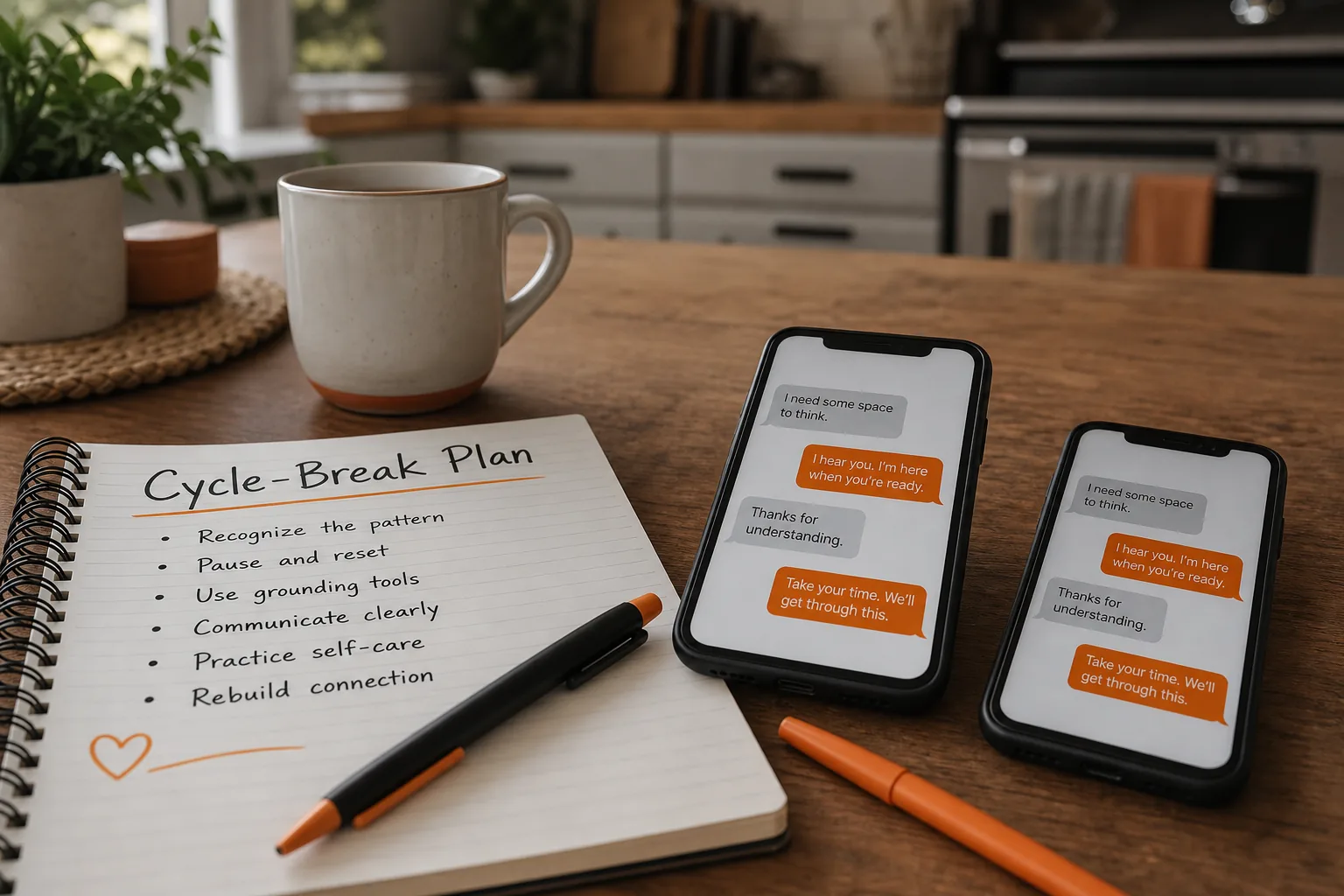
Pro Tip: Keep a one‑page cheat sheet of these steps on your fridge. Seeing the plan daily makes it easier to act when the cycle starts.
When Couples Therapy Can Help, and What a Systemic Approach Considers
Therapy is useful when the pattern feels stuck despite your best attempts. An evidence‑based approach like Emotionally Focused Therapy (EFT) targets the underlying attachment fears that drive the loop.
At Fostering Growth and Cooperation, Dr. Samuel Eshleman Latimer guides couples to map their own cycle, practice new responses, and build a shared safety net. The practice blends EFT with a systemic lens, seeing each partner’s behavior as part of a larger relational system. In-person couples therapy in Bellevue serves Northern Kentucky and Greater Cincinnati.
A systemic therapist looks beyond the immediate fight. They ask how family of origin, work stress, and daily routines feed the pattern. By adjusting the broader environment, like setting shared screen‑free times or renegotiating chores, the couple creates new interaction habits.
Therapy also offers a neutral space for each partner to voice needs without fear of judgment. The therapist mirrors back what each person is really feeling, helping partners move from “you” statements to “I” statements.
When there is ongoing abuse, severe mental health crisis, or safety concerns, the therapist will recommend additional resources or medical care. The goal is always to support a safe, respectful partnership.
To see if therapy fits your situation, start with a free 2‑minute family peace assessment. It helps identify the patterns at play and suggests next steps. Free family peace assessment
Conclusion
If the pursuer‑distancer pattern feels familiar, try labeling the loop, using a gentle start‑up, and taking brief pauses. When the cycle persists, a therapist trained in EFT can help you rewrite the script.
Take the next step by completing the free assessment and seeing if a brief session with Dr. Latimer could bring new clarity. Start your assessment
References
Johnson, S. M. (2019).Attachment theory in practice: Emotionally focused therapy (EFT) with individuals, couples, and families. Guilford Press.
Gottman, J., & Silver, N. (2015).The seven principles for making marriage work. New York, NY: Harmony.
American Psychological Association. (n.d.). Attachment. Retrieved from https://www.apa.org/topics/attachment



Comments