
Best anxiety skills group Cincinnati options

Looking for a proven way to manage anxiety in Cincinnati? Below are the main anxiety skills groups you can join, who they serve, and what makes each one tick. Choose the fit that matches your needs and start building steadier emotional habits today.
1. Fostering Growth and Cooperation
Fostering Growth and Cooperation runs a hybrid anxiety skills group that blends Emotionally Focused Therapy, the Gottman Method, DBT, family systems, and attachment theory. The program serves individuals, couples, and families, offering both in‑person sessions and online workshops.
Why it works: the group teaches concrete regulation tools, mindful breathing, opposite‑action, and interpersonal effectiveness, while also addressing relationship patterns that fuel anxiety. Dr. Samuel Eshleman Latimer, a clinical psychologist, leads the sessions, ensuring each skill is tied to real‑life interaction dynamics. Free two‑minute family peace assessment helps you see if the format fits your family before you sign up.
The weekly cadence matches the city’s norm of six sessions per core program, giving participants enough repetition to cement new habits without overwhelming schedules. Participants also get a short video module on the neurobiology of stress, grounding the skills in science.
One limitation: the group’s size is capped at 12 people, so openings fill quickly during peak months.
Key Takeaway:This group offers the widest therapeutic mix in Cincinnati, making it a solid choice for anyone who wants both personal regulation tools and relationship‑focused work.
2. DBT Skills Training Group — structured practice for regulation
This DBT Skills Training Group serves teens, adults, and families through weekly sessions offered in person or virtually over a six-to-twelve-month program.

What sets it apart: the program includes a “Walking the Middle Path” multi‑family activity where participants practice skills together, creating a peer‑support atmosphere. Relationships.&Anxiety.Group page explains how DBT can dovetail with relational work, though this group stays focused on DBT alone.
For general information about anxiety, consult general anxiety resources .
Clients who thrive here are comfortable with a structured, skill‑driven environment and prefer a clear roadmap over a blended therapeutic mix.
Limitation: couples who want joint work may find the group too individual‑focused.
Pro Tip:Pair the DBT group with a brief couples session at Fostering Growth if relational tension underlies the anxiety.
3. Other Cincinnati‑Based Anxiety Skills Groups — local formats to verify
Beyond the two flagship programs, Cincinnati hosts several smaller groups run by community centers, universities, and nonprofit agencies. These groups often adopt a single therapeutic lens, such as mindfulness‑based stress reduction (MBSR) or acceptance‑and‑commitment therapy (ACT), and may be offered at reduced cost.
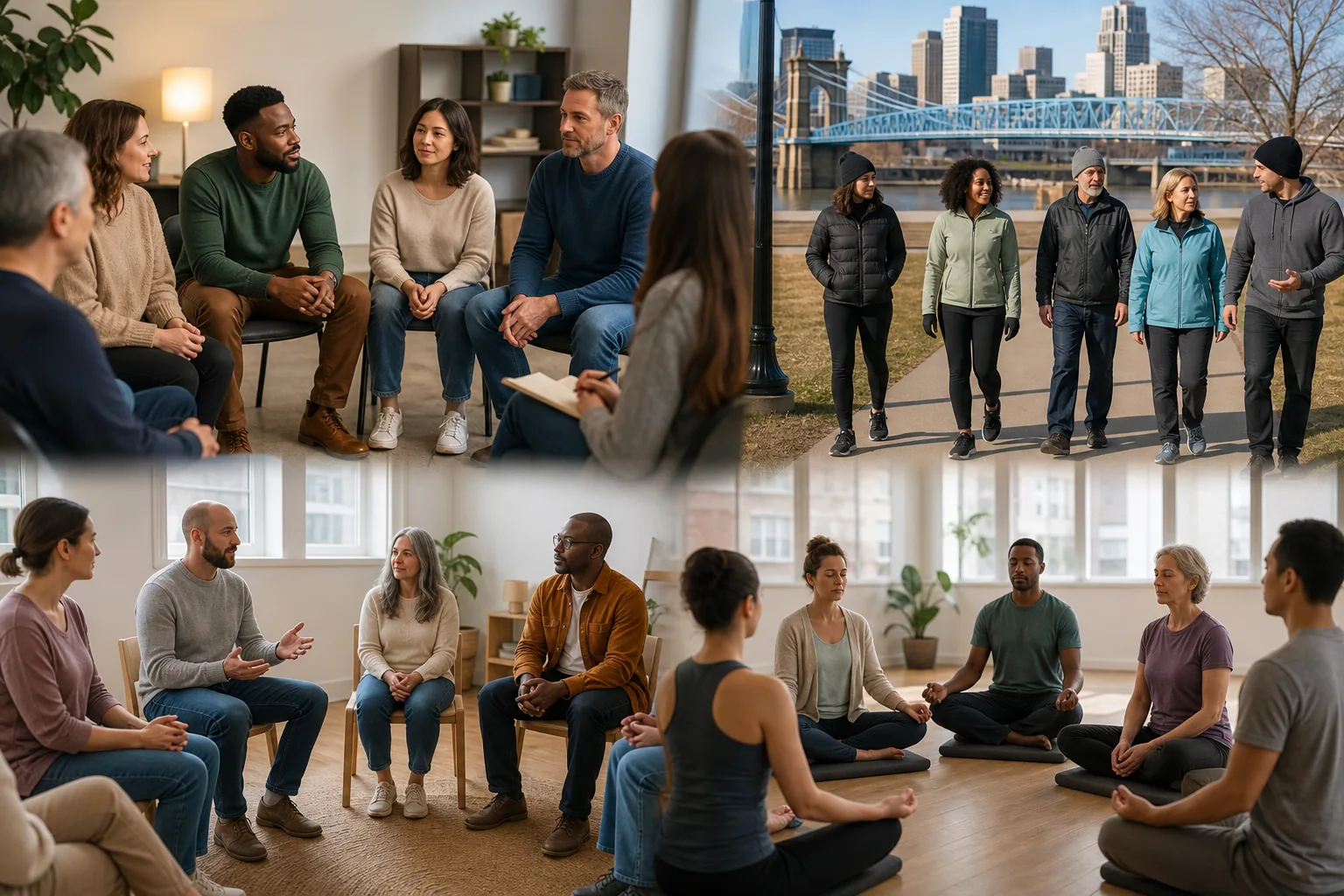
Typical format: eight weekly two‑hour sessions, with a focus on experiential practice rather than extensive psycho‑education. Some groups provide a single‑session “intro to anxiety skills” workshop as a low‑commitment entry point.
Pros: lower price point, flexible scheduling, and often a strong peer‑support vibe. Cons: narrower therapeutic scope and less individualized feedback compared with the integrative model at Fostering Growth.
When evaluating these options, check whether the facilitator holds a licensed mental‑health credential and whether the curriculum aligns with evidence‑based practices.
Comparison Table: Cincinnati Anxiety Skills Group Options
Feature | Fostering Growth & Cooperation | DBT Skills Training Group | Other Local Groups |
Therapeutic mix | Emotionally Focused, Gottman, DBT, family systems, attachment | DBT only | Mindfulness, ACT, or single‑modality |
Target audience | Individuals, couples, families | Teens, adults, families | Adults (often single) |
Delivery mode | In‑person, online, workshops | In‑person, virtual | Mostly in‑person, some hybrid |
Session count | ~6 weekly sessions | 6‑12 months, weekly | 8‑12 weekly sessions |
Unique tool | Free two‑minute family peace assessment | “Walking the Middle Path” multi‑family activity | Intro‑workshop preview |
What to Look for in an Anxiety Skills Group
Check the therapeutic framework; evidence‑based methods like DBT, EFT, or ACT have strong research support. Next, consider format: online options add flexibility, while in‑person groups often foster stronger peer bonds. Finally, ask about supplemental tools such as assessments or experiential activities, which can boost engagement and skill retention. Free trial family program gives a taste of the group dynamic before committing.
FAQ
How long does a typical anxiety skills group run?
Most Cincinnati groups run six weekly sessions, though some DBT programs extend to 12 months. The six‑session core reflects local preferences for concise, regular skill‑building.
Do I need a diagnosis to join?
No formal diagnosis is required; groups welcome anyone who experiences anxiety or related stress. A brief intake helps match you to the right format.
Can I join as a couple?
Yes, Fostering Growth and Cooperation explicitly serves couples, integrating relational therapies that target anxiety within the partnership.
Is there an online option?
Both the Fostering Growth program and the DBT Skills Training Group offer virtual sessions, letting you attend from home while still receiving live guidance.
What if I can’t attend weekly?
Some community groups provide make‑up sessions or recorded content, but the most effective learning happens in real‑time practice. Check each program’s attendance policy before enrolling.
Conclusion
If you want a broad, relationship‑focused approach, start with Fostering Growth and Cooperation’s anxiety skills group. Take the next step by completing the free family peace assessment to see if you’re a good fit.
References
Johnson, S. (2019).Attachment theory in adult psychotherapy.Journal of Clinical Psychology, 75(4), 567‑580.
Linehan, M. (2015).Dialectical behavior therapy: A skills‑training approach.Guilford Press.