
Best Family Communication Exercises

Families often get stuck in loops of misunderstanding, frustration, or silence. Below are ten family communication exercises that can break those patterns and help everyone feel heard.
1. Feelings Circle — Practice naming emotions and listening without interruption
Each person takes a turn sharing how they feel, using simple "I feel…" statements while the rest of the group holds space and does not interrupt.
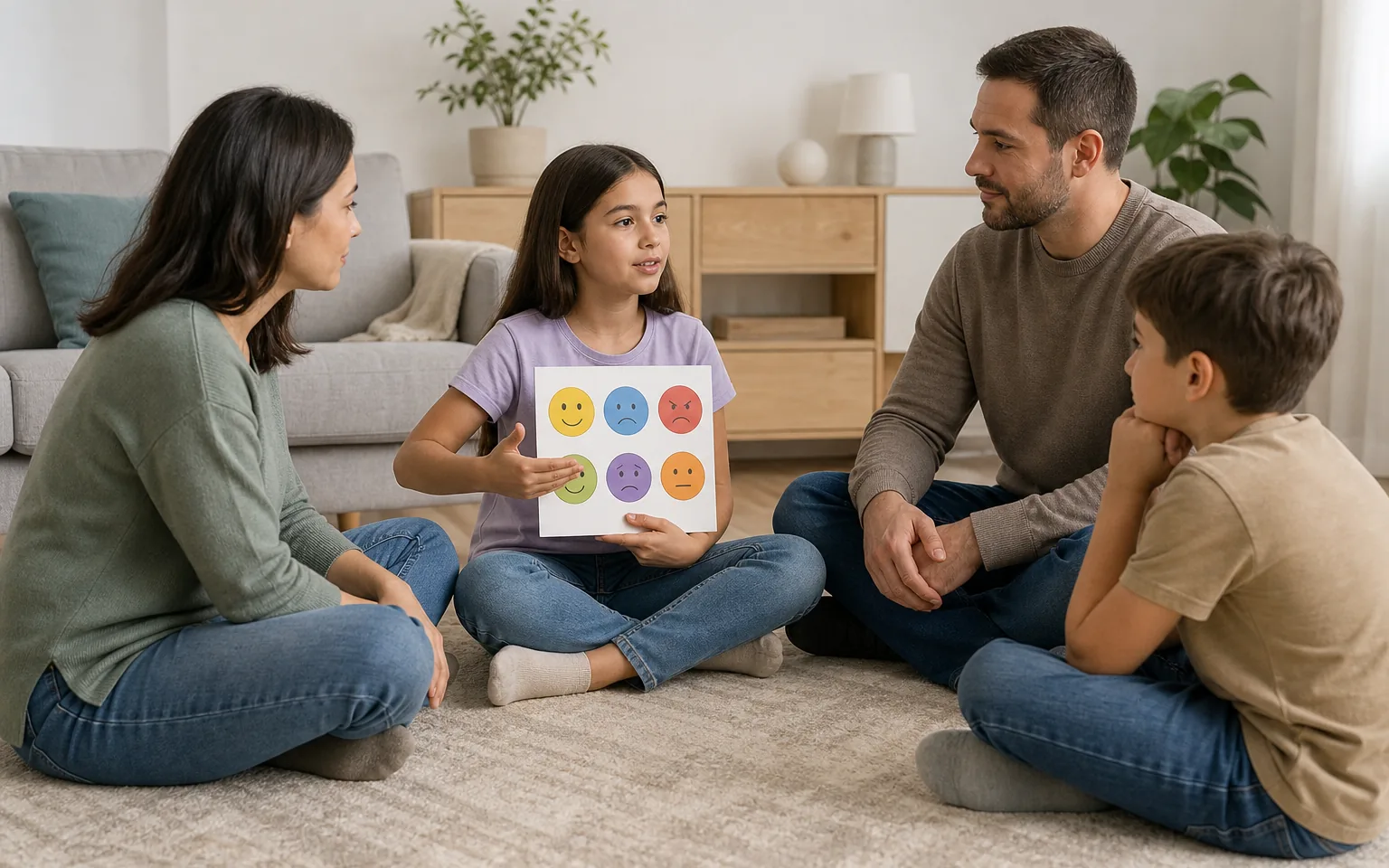
It works well for children who can point to a feelings chart before speaking, and for teens who need a concrete format to express deeper emotions.
Research shows that structured sharing can improve emotional awareness and reduce anxiety in families (emotional regulation).
After each turn, the listener reflects back what they heard, which reinforces active listening and shows that the speaker’s experience matters.
Best for families who want a low‑stress way to start conversations about daily moods.
2. Emotion Charades — Read emotional cues with curiosity
Write a range of emotions on slips of paper. Players act out the feeling without words while the rest of the family guesses.

This non‑verbal game sharpens the ability to read facial expressions, tone, and body language, skills that often get lost in digital communication.
Adapt the game for younger kids by using exaggerated facial expressions; for older teens, add subtle emotions like “embarrassed” or “hopeful.”
It’s a quick break that can turn a tense moment into a playful learning experience.
3. Pass the Message — Notice how listening and assumptions shape a conversation
Family members sit in a line. The first person whispers a sentence to the next, and the message travels to the end where the last person says it out loud.

Usually the final version looks very different, highlighting how easily details get lost when we don’t listen carefully.
Use the exercise to discuss how assumptions, interruptions, and selective hearing change meaning.
After the reveal, ask each person what they thought the original intent was and why the message shifted.
Facilitators often pair this with a brief discussion about the value of asking clarifying questions before responding.
Our family conflict workshops include a version of this activity that ties directly into real‑life scenarios.
Great for families who want to see the impact of listening habits in action.
4. Build a Tower — Try cooperation over control
Provide paper, tape, or marshmallows and spaghetti. The goal is to build the tallest stable tower as a team.

Success requires each member to share ideas, negotiate placement, and respect others’ contributions.
When disagreements arise, pause and ask each person what they need to feel heard before deciding on a new approach.
Families report that the physical act of building together mirrors the process of co‑creating solutions to everyday problems.
This exercise is especially helpful for households where one person tends to dominate decisions, as the structure forces shared responsibility.
After the tower is built, discuss what strategies helped the group stay coordinated and what could be improved next time.
5. Blindfold Obstacle Course — Give clear directions and ask what support is needed
Set up a simple obstacle course using cushions, chairs, or taped lines. One family member is blindfolded while another gives step‑by‑step directions.

The blindfolded person learns to trust the speaker’s instructions; the guide learns to be precise and ask, “Do you need me to slow down or repeat?”
Switch roles so everyone experiences both giving and receiving guidance.
This activity highlights the importance of clear, calm language during high‑stress moments.
For families who prefer a structured approach, our evidence‑based family cooperation exercises guide offers printable worksheets to accompany the course.
It works well for children ages 6 and up, as well as for adults who want to practice concise communication.
6. Group Drawing — Make room for different perspectives
Lay a large sheet of paper on the floor. Each family member adds a line, shape, or color without speaking, building a shared picture.

The silent collaboration encourages observation of others’ artistic choices and invites discussion about why each element was added.
When the drawing is complete, talk about the final image: whose idea stood out? Which parts blended well? Which felt out of place?
This reflective dialogue teaches families to appreciate diverse contributions without immediately judging them.
It’s a low‑tech way to turn a quiet moment into a conversation about values and preferences.
7. Family Problem Jar — Turn recurring friction into a shared problem‑solving conversation
Write common family challenges on slips of paper, things like “screen time limits,” “chores,” or “bedtime arguments.” Toss them into a jar.
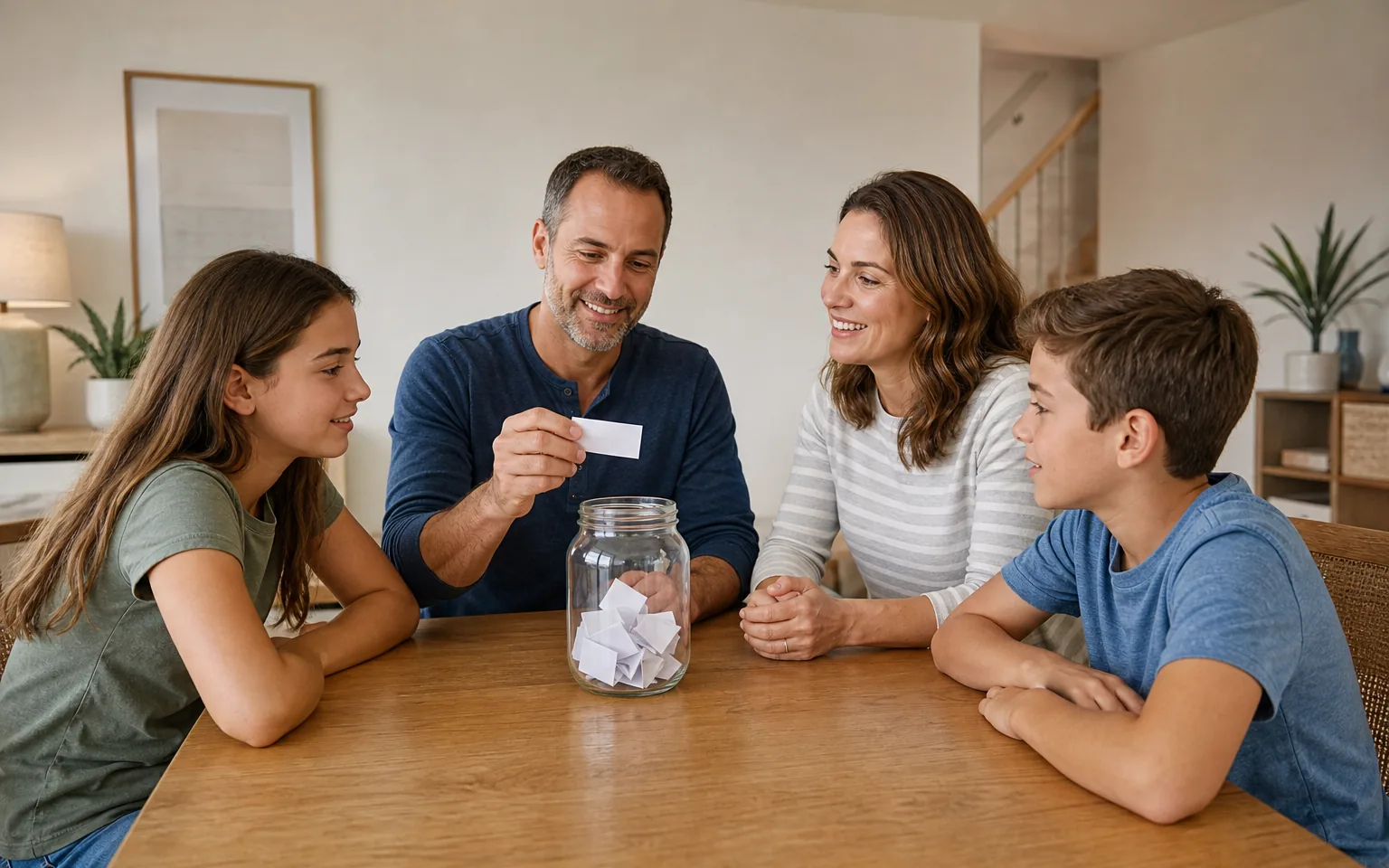
When tension spikes, draw a slip and spend ten minutes brainstorming solutions together.
The process normalizes that every issue is a shared problem, not a personal attack.
Because the topics are pre‑written, the family avoids the trap of blaming the person who raised the issue.
After each session, note which ideas worked and which need tweaking. Over time, the jar becomes a catalog of tested strategies.
This simple tool is often used in therapeutic settings to create a habit of collaborative problem‑solving.
8. Role Reversal — Explore another person's perspective without claiming to speak for them
Pick a recent disagreement. One person plays the other’s role, using the other’s words and tone while the original speaker observes.

The goal is not to mimic perfectly but to feel what it might be like to be on the other side of the conversation.
After the role‑play, discuss what surprised each participant and how the perspective shift changed their feelings.
This exercise reduces defensiveness and builds empathy, especially useful for teen‑parent conflicts where power dynamics are strong.
Our therapists often pair role reversal with “I‑statement” practice to keep the dialogue constructive.
For families interested in structured programs, explore our flexible payment options for workshops and online modules.
9. Conflict Scripts — Use feeling words, “I” statements, and repair language
Write out a typical argument in script form, then rewrite each line using feeling words (“I feel frustrated”) and repair phrases (“I’m sorry that hurt you”).

Practicing the script helps families replace blame with ownership and invites quick repair after tension.
When the rewritten script is read aloud, it often feels less threatening and more collaborative.
Therapists recommend reviewing the script after the real conflict has cooled, noting which parts felt natural and which need more practice.
This method aligns with research on the Gottman “repair attempts” that predict relationship success.
10. Family Coat of Arms — Name shared values, strengths, and hopes
Provide a template divided into six sections: values, strengths, hopes, traditions, symbols, and a motto.
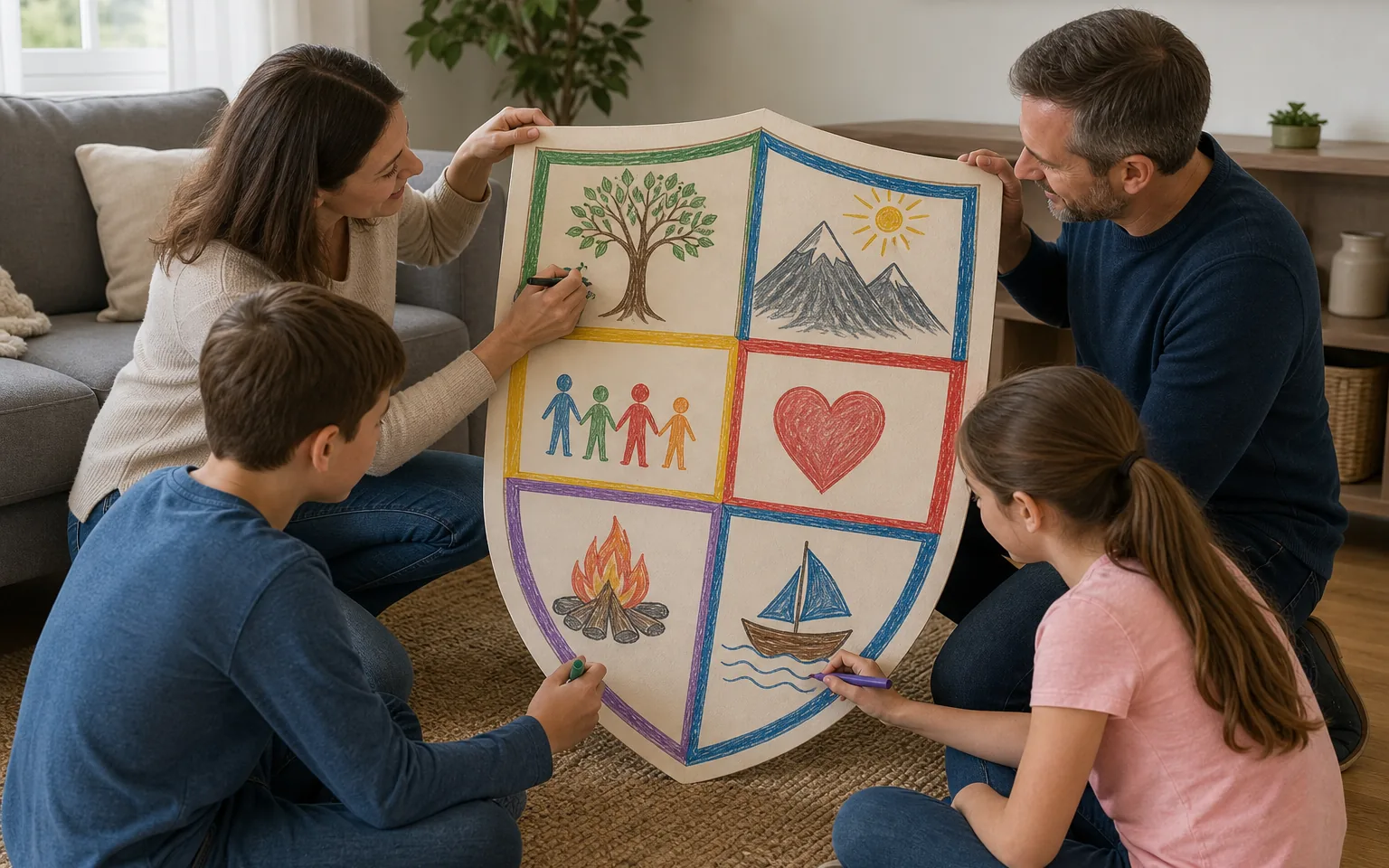
Each member adds a drawing or word to every section, then the family discusses why each piece matters.
The final coat of arms becomes a visual reminder of what the family stands for, reinforcing a shared identity.
Studies on family symbols show they can boost cohesion and give children a concrete sense of belonging.
Display the finished coat of arms in a common area to keep the conversation alive.
At-a-glance comparison: Which family communication exercise fits your situation?
Frequently asked questions
What age is the right time to start using family communication exercises?
Even preschoolers can join simple activities like the Feelings Circle; older children benefit from more structured scripts.
Do I need a therapist to run these exercises?
Most of the exercises can be done at home without professional guidance, though a therapist can help tailor them to specific family dynamics.
How often should a family practice these activities?
Consistency matters; aim for one short exercise a week or integrate a quick version into daily routines.
What if a family member becomes upset during an exercise?
If strong emotions arise, pause the activity, practice a calming technique such as deep breathing, and consider seeking professional help if distress persists.
When should we contact a mental‑health professional?
If any family member experiences severe anxiety, depression, thoughts of self‑harm, or ongoing conflict that feels unsafe, call 988 or visit a health‑care provider right away.
Conclusion
Pick the exercise that feels most relevant to your current challenge, try it together, and notice how the conversation shifts. When you’re ready for deeper support, explore the free 2‑minute family peace assessment on our website to see which resources fit your family best.
Exercise | Best for ages | Key focus | Typical time |
Feelings Circle | 4‑12 | Emotion naming, active listening | 10‑15 min |
Emotion Charades | 5‑16 | Non‑verbal cues, empathy | 15‑20 min |
Pass the Message | 8‑Adult | Listening accuracy, assumption spotting | 10‑12 min |
Build a Tower | 6‑Adult | Co‑operation, shared decision‑making | 20‑30 min |
Blindfold Obstacle | 7‑Adult | Clear instructions, trust | 15‑20 min |
Group Drawing | 5‑Adult | Perspective‑taking, creativity | 15‑25 min |
Problem Jar | All | Collaborative problem‑solving | 10‑15 min per issue |
Role Reversal | 12‑Adult | Empathy, viewpoint shift | 20‑30 min |
Conflict Scripts | All | Repair language, I‑statements | 15‑20 min |
Family Coat of Arms | All | Shared values, identity | 30‑45 min |
Ready to put this into practice? Fostering Growth and Cooperation was built for exactly this.



Comments