
Best psychologist Cincinnati: 6 therapy options

Finding the right psychologist in Cincinnati can feel overwhelming. You want a therapist who uses proven methods and fits your schedule. Below are six options, each with a quick snapshot of who they serve and what they bring to the table.
1. Fostering Growth and Cooperation
Fostering Growth and Cooperation is a Cincinnati‑based practice that blends Emotionally Focused Therapy, the Gottman Method, DBT, and family‑systems work. It serves parents, couples, individuals dealing with anxiety or anger, schools, and co‑parents handling shared custody. The practice offers in‑person sessions, online programs, and workshops, giving clients flexibility to fit therapy into busy lives.
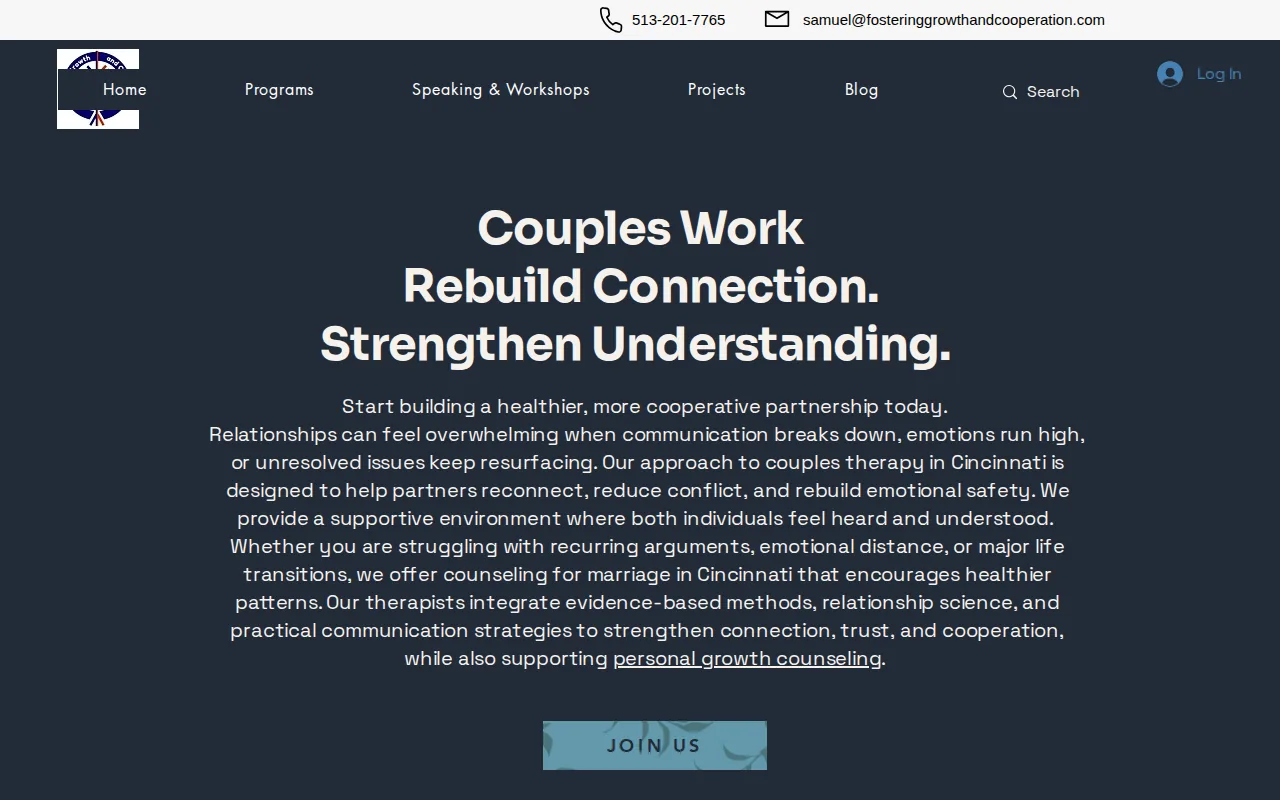
Key Takeaway:A single practice covers individual, couple, and family work with both face‑to‑face and virtual options.
Dr. Samuel Eshleman Latimer leads the team, drawing on attachment theory and neurobiological insights to break conflict cycles. Clients report clearer communication and steadier emotional regulation, skills that extend beyond the therapy room. The only caveat is that the practice’s complete approach may feel intense for someone seeking a brief, single‑issue visit.
To explore fit, review the 2‑minute family peace assessment .
2. Mood Disorders Center — Specialized care for complex mood and substance‑use concerns
The Mood Disorders Center focuses on adults and adolescents with complicated mood disorders, often intertwined with substance‑use challenges. Services are delivered in‑person. Additional information is available through the linked health page .

This clinic is a solid match if you need intensive monitoring, medication management, and a team that includes psychiatrists and psychologists. It does not currently offer telehealth, which may limit access for those with tight schedules. Insurance acceptance varies, so verify coverage before starting.
3. LifeStance Health — Flexible Cincinnati therapy with telehealth access
LifeStance Health runs a full‑service mental‑health clinic at two Cincinnati locations. Clients can choose in‑person visits or video appointments, making it easy to fit therapy into work or family commitments.

The practice offers a range of modalities, from CBT to psychodynamic work, but it does not explicitly list evidence‑based relationship approaches like EFT or the Gottman Method. If you prefer a clear focus on couples or family systems, you may need to ask about therapist specialties. Insurance information is not prominently displayed, so a phone call may be required to confirm coverage.
For a deeper look at how telehealth can fit into a busy life, read our Couples Therapy Cincinnati: A Usable Guide .
4. Jeremiah Allen Schumm — Behavioral couples therapy for PTSD and substance‑use challenges
Jeremiah Allen Schumm provides behavioral couples therapy that targets PTSD and substance‑use disorders. His approach combines behavioral couple therapy, cognitive‑behavioral conjoint therapy, and Cognitive Processing Therapy.

Clients who struggle with trauma‑related conflict often find his structured, skill‑based sessions effective. The practice operates out of a university setting, which may provide a research‑backed environment but can also mean limited evening hours. Insurance participation is not clearly listed, so check ahead.
5. Mason Family Counseling — Broad individual, couples, and family therapy
Mason Family Counseling offers individual, couples, and family therapy via both in‑person and telehealth formats. The practice accepts many insurance plans, which can reduce out‑of‑pocket costs for families.
Therapists use a mix of CBT, ACT, and narrative techniques, giving clients a variety of tools to manage anxiety, depression, and relationship stress. The downside is that the site does not specify whether they use relationship‑science models such as EFT or the Gottman Method, so you may need to ask about therapist training.
6. Clear Path Couples Counseling — Relationship‑focused care using Gottman and EFT approaches
Clear Path Couples Counseling centers its work on Emotionally Focused Therapy and the Gottman Method. Sessions are in‑person and target couples who want to rebuild trust, improve communication, and handle life transitions.

Clients often notice better conflict resolution within a few sessions, though deeper patterns can take longer to shift. The practice does not list telehealth options, so it may not suit those who need remote access. Insurance acceptance is not advertised, which could be a barrier for some families.
Cincinnati Psychologist Comparison Table
Provider | Primary Focus | Delivery Mode | Best For | Insurance |
Fostering Growth and Cooperation | Family, couples, individual therapy | In‑person, online programs, workshops | Clients seeking integrated relationship science | Varies; check directly |
Mood Disorders Center | Complex mood & substance‑use | In‑person | Adults/adolescents with severe mood issues | Varies |
LifeStance Health | General mental health | In‑person, telehealth | Those wanting flexible scheduling | Not listed |
Jeremiah Allen Schumm | Behavioral couples therapy (PTSD, substance‑use) | In‑person | Couples dealing with trauma | Not listed |
Mason Family Counseling | Individual, couples, family | In‑person, telehealth | Families needing insurance coverage | Accepts many plans |
Clear Path Couples Counseling | Gottman & EFT couples work | In‑person | Couples focusing on communication | Not listed |
How to choose the right psychologist
Identify the core issue: individual anxiety, couple conflict, mood disorder, etc.
Check modality: Does the provider use EFT, Gottman, CBT, or a blend?
Confirm delivery mode matches your schedule (in‑person vs. telehealth).
Verify insurance acceptance or out‑of‑pocket costs.
Ask about therapist credentials and years of experience.
FAQ
What should I look for in a psychologist in Cincinnati?
The most important factors are the therapist’s evidence‑based approach, how well it matches your specific issue, the availability of in‑person or virtual sessions, and whether your insurance is accepted.
Does Fostering Growth and Cooperation offer telehealth?
Yes, the practice provides online programs and video workshops in addition to traditional in‑person sessions.
Are there psychologists who specialize in mood disorders combined with substance use?
The Mood Disorders Center focuses specifically on complex mood disorders that often co‑occur with substance‑use challenges.
Can I get couples therapy that uses the Gottman Method?
Clear Path Couples Counseling uses the Gottman Method alongside Emotionally Focused Therapy to help couples improve communication and trust.
How do I know if my insurance will cover therapy?
Contact the provider’s billing office before your first appointment; Mason Family Counseling explicitly lists insurance acceptance, while others may require a quick verification call.
Conclusion
If you want a practice that combines several research‑backed relationship models and offers both face‑to‑face and online options, start with Fostering Growth and Cooperation. Take the next step by completing the free family peace assessment to see how their services match your goals.
References
Attachment theory in couple therapy.
The seven principles for making marriage work.
Emotionally Focused Therapy.Retrieved from Wikipedia.
Mood Disorders Center. Retrieved from uc.edu .
Bowlby, J. (1969).Attachment and loss: Vol. 1. Attachment. Basic Books.
Gottman, J. M., & Silver, N. (1999).The seven principles for making marriage work. Crown Publishing Group.
Porges, S. W. (1995).Polyvagal theory: Neurophysiological foundations of emotions, attachment, communication, and self-regulation. W. W. Norton & Company.


Comments