
Cincinnati Couples Therapy Session Price: What to Expect

The Cincinnati couples therapy session price can vary by provider, session length, and payment method. Three Cincinnati providers charge $150 to $155 per session, averaging $151.67. Use these steps to estimate your costs and check what insurance may cover.
Step 1: Set a realistic Cincinnati couples therapy price range
Start with a price range, not a single expected bill. Three Cincinnati providers charge between $150 and $155 per session. That’s a narrow snapshot of posted rates, not a citywide average or a guarantee of what a particular couple will pay.
Fostering Growth and Cooperation ’s stated couples therapy rate is $150 to $300 per hour. The final fee can depend on the service and appointment details, so confirm the cost and session length directly before you plan a budget. The practice offers evidence-based therapy for couples, families, and individuals, with in-person services in the Greater Cincinnati area and online services where Dr. Samuel Eshleman Latimer is authorized to practice.
When you compare prices, ask what the quoted fee covers. A session may have a set length, or a provider may discuss a different format for your needs. Also ask whether the rate applies to both partners attending together. Those details help you compare like with like.
For a broader look at cost factors, our guide to online couples counseling costs explains how format and insurance questions can affect what you pay.
Keep the comparison narrow. Published prices can help set a starting point, but they don’t show whether a provider accepts your plan or how much your insurer may reimburse.
Step 2: Calculate the cost of the appointment and therapy schedule
Estimate the full cost by multiplying the fee by the number of sessions you expect to attend, then add any travel or other session-related costs. For example, if you budget for four appointments at $175 each, the session fees total $700 before any insurance reimbursement. That’s a planning example, not a suggested treatment schedule.
Ask how long an appointment lasts and how often sessions are usually scheduled at the start. Sarah offers 50-minute couples sessions; compare appointment lengths with Cincinnati Therapy Center and CTC Couples Counseling when contacting them. Appointment time affects the total cost, so compare rates alongside duration.
A first appointment may include time to hear each partner’s concerns and agree on shared goals. Later sessions may focus on a recurring interaction cycle, such as one partner pressing for a response while the other withdraws. The therapist may help both partners notice the pattern and practice a different way to respond. A relationship-focused view treats the cycle as the shared problem, rather than assigning fault to one person.
Attachment theory offers one way to understand how partners respond to closeness and stress. Ask the therapist what happens between sessions, too. If there is suggested practice at home, find out whether it is included in the appointment fee or requires extra time.
We describe the focus of couples therapy in Cincinnati in more detail, including how partners can discuss goals and therapy format together.
Step 3: Check insurance benefits and file a superbill
Before booking, contact your insurer and ask how your specific plan handles couples therapy. Coverage rules vary. Some plans may cover therapy only when it addresses a diagnosed condition for one person, rather than relationship concerns alone. Ask what diagnosis or billing requirements apply, whether your plan has out-of-network benefits, and what you would pay before reimbursement.
For provider-specific rates and insurance information, review this rates and insurance page . It does not confirm that a plan will reimburse a particular couples appointment. Your insurer can explain the terms of your own policy.
A superbill is an itemized receipt you can submit to your insurer for possible out-of-network reimbursement. Ask the provider whether they issue one and what information it includes. Then follow your insurer’s claim process:
Ask whether your plan reimburses out-of-network mental health services that involve both partners.
Confirm any diagnosis, provider, or billing requirements before the first appointment.
Request a superbill after paying the provider, if available.
Submit it using your insurer’s instructions and keep a copy for your records.
Check the claim status and ask the insurer to explain any denial or adjustment.
Reimbursement isn’t guaranteed. The insurer may apply your deductible, set a maximum amount, or decide that the service doesn’t meet the plan’s coverage rules. If the process feels unclear, ask the insurer to explain the expected out-of-pocket amount in plain language before you commit to a schedule.
Fostering Growth and Cooperation provides couples therapy in person and online, with teletherapy limited to states where Dr. Latimer is currently authorized to practice. Ask the practice and your insurer about your specific payment and reimbursement options.
Step 4: Compare affordability factors before choosing a format
Compare the total cost and logistics of each format, not only the session fee. In-person couples therapy in Bellevue, Kentucky, or elsewhere in Northern Kentucky may involve travel time and transportation costs. Online sessions may reduce travel, but availability depends on where the clinician can legally provide care.
Ask whether the quoted price changes with session length or format. Then check whether a group service is available and whether its structure fits what you’re seeking. A group appointment is different from a private session: it includes shared discussion with other participants, so ask about privacy and the group’s focus before deciding.
Other details can shape affordability. These include the clinician’s credentials, the appointment length, and whether the work calls for a specialized format. Don’t assume that a higher fee means a better fit. Ask how the therapist’s training and approach relate to your goals, and whether the plan includes any added charges.
Fostering Growth and Cooperation is led by Dr. Samuel Eshleman Latimer, a licensed clinical psychologist. Its practice information describes evidence-based services for couples, families, and groups. You can ask about in-person couples therapy near Cincinnati or whether online care is available in your state.
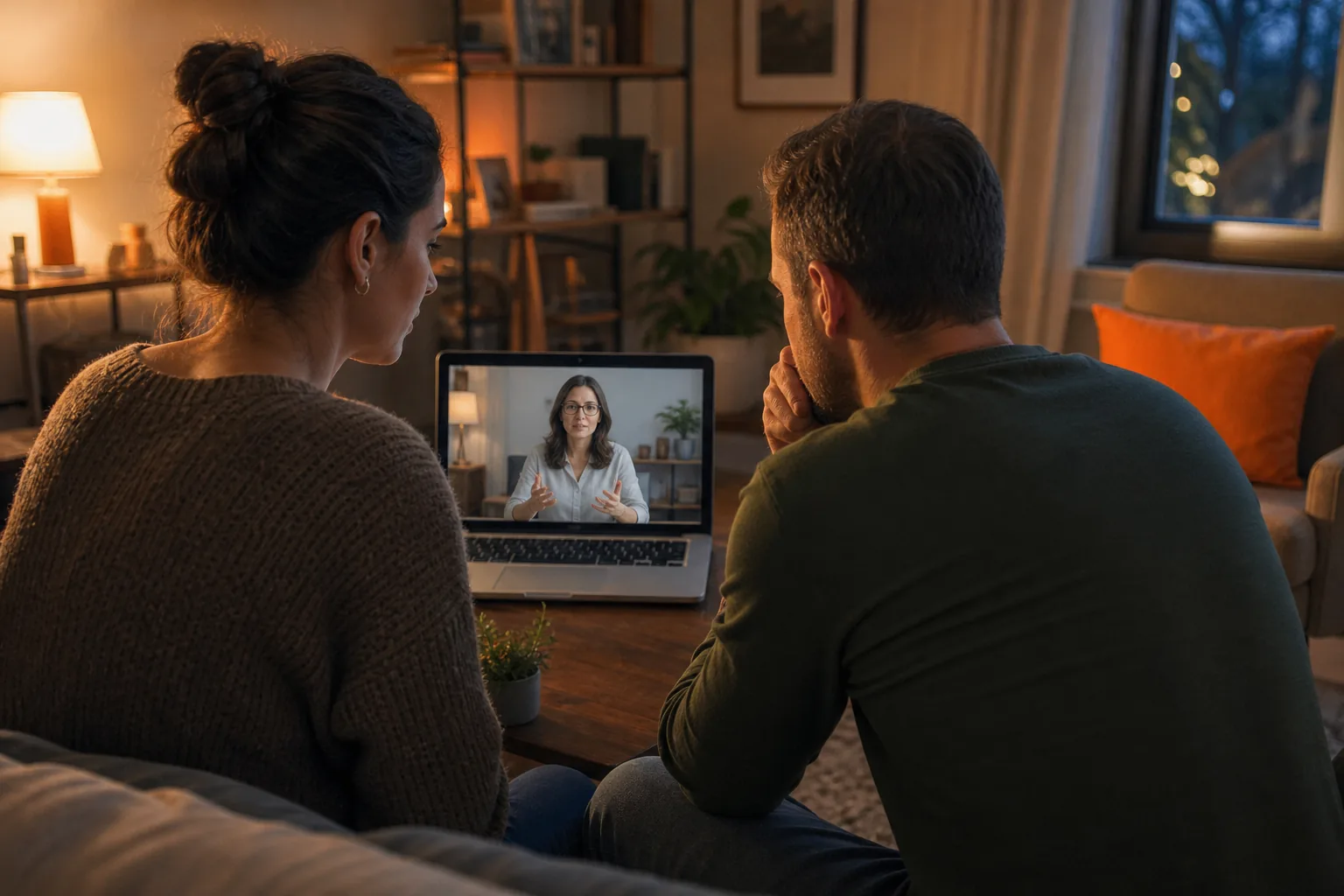
For couples who are weighing options, a useful comparison is the one that includes fee, appointment length, travel, privacy, and insurance fit on the same page.
Step 5: Build a budget and ask the right questions locally
Choose a monthly amount you can sustain, then use it to work backward. Session fees and scheduling vary, so ask providers for current rates and estimate how many appointments fit your budget before considering reimbursement or other costs. This is only a planning approach; your fee and schedule may differ.
Before you agree to begin, ask these questions:
What is the fee, and how long is each appointment?
How often might sessions take place at the start?
Does the fee change for a longer appointment or another format?
Can I use insurance, an HSA, or an FSA for this service?
Can you provide a superbill, and what details should I confirm with my insurer?
What is the cancellation policy?
Ask about reduced-fee options directly rather than assuming they are available. If you’re looking for marriage counseling near Cincinnati, mention your preferred location and format when you ask about scheduling. In-person service areas include Bellevue, Northern Kentucky, and Greater Cincinnati. Online therapy is available only in states where Dr. Latimer is authorized to practice.
Fostering Growth and Cooperation also offers a free family peace assessment that takes about two minutes. It’s designed for families, so couples can use it to consider whether a family-focused resource fits their needs, not as a substitute for a therapy assessment. To review your options, start with the free family peace assessment .
If emotional distress includes thoughts of suicide or immediate danger, seek urgent help through local emergency or crisis services rather than waiting for a therapy appointment; call 911 for an immediate emergency.
Frequently Asked Questions
How much does couples therapy cost in Cincinnati?
Three Cincinnati providers charge between $150 and $155 per session, averaging $151.67. Fostering Growth and Cooperation’s stated rate is $150 to $300 per hour. Treat these figures as planning information, then confirm the fee, appointment length, and payment details with the provider you’re considering.
Does insurance cover couples therapy?
Insurance may cover some therapy costs, but coverage for couples work depends on the plan and how the service is billed. Ask whether your plan requires a diagnosis for one partner, whether out-of-network reimbursement applies, and how your deductible affects payment. Confirm these details with your insurer before starting.
How do I use a superbill for couples therapy reimbursement?
Ask the provider whether they issue a superbill, then check your insurer’s rules before you submit it. The insurer may require specific billing details or a diagnosis. Follow the plan’s claim steps and keep copies of the superbill and any response. Reimbursement depends on your policy and isn’t guaranteed.
How long is a couples therapy session?
Session length varies by provider and format. Sarah offers 50-minute couples sessions; compare appointment lengths with Cincinnati Therapy Center and CTC Couples Counseling when contacting them. Ask how long the appointment lasts and whether the fee changes for a longer session. Compare the time and price together.
Can we do couples therapy online near Cincinnati?
Online couples therapy may be an option if the clinician is authorized to provide services in your state. Fostering Growth and Cooperation offers online therapy, but availability depends on Dr. Samuel Eshleman Latimer’s current authorization. Ask about your state before scheduling. In-person services are available in Bellevue, Northern Kentucky, and Greater Cincinnati.
Conclusion
Set a budget using the session fee, appointment length, and any likely reimbursement, then confirm those details with the provider and insurer. If you’re considering Fostering Growth and Cooperation, the free family peace assessment can help you decide whether to explore a consultation or another resource.
References
Attachment theory and human development.
Johnson, S. M. (2004).The practice of emotionally focused couple therapy: Creating connection.Brunner-Routledge.



Comments