
Couples Therapy Sliding Scale: 6 Options for 2026

Couples therapy fees range from $10 to $250 per session depending on where you look, and the eligibility rules are just as varied as the prices. If cost has been the thing standing between your relationship and real support, this shortlist breaks down six options , who they're for, what they actually charge, and where the catch is.
Table of Contents
1. Open Path Collective — $40–$80 Sessions With a One-Time Membership
2. UC Behavioral Health Center — Low-Cost In-Person Therapy for Cincinnati Couples
3. Sentio Counseling Center — Fully Online Sliding-Scale Therapy for Low-Income Couples
4. Tony Fryer MFT — Income-Based Fees for Higher-Earning Couples Who Still Need Relief
5. Fostering Growth and Cooperation — Evidence-Based Couples Therapy in Cincinnati
6. Community Mental Health Centers — Publicly Funded Sliding-Scale Counseling Nationwide
Sliding Scale vs. Insurance vs. Direct Pay — Which Model Fits Your Situation?
1. Open Path Collective — $40–$80 Sessions With a One-Time Membership
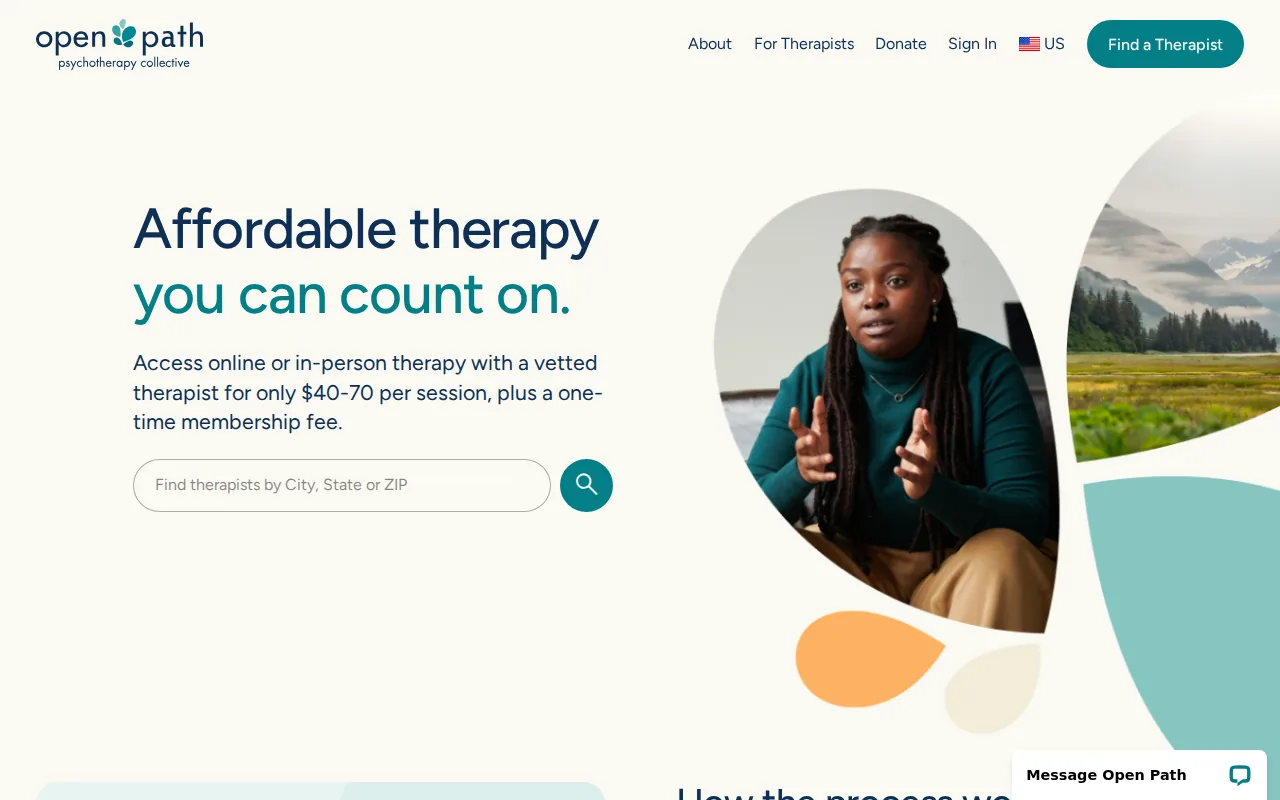
Open Path Collective is a national directory of licensed therapists who have agreed to see clients at reduced rates. Members pay a one-time fee to join and then access therapists charging $40 to $80 per session, well below the typical private-practice rate.
The therapists on the platform are licensed, not interns. That's an important distinction. Sliding-scale directories sometimes draw in pre-licensed clinicians building hours, but Open Path's therapists have cleared licensure. The trade-off is availability. Caseloads are limited, so you may need to reach out to several therapists before finding one with an opening for couples work specifically.
Open Path works for couples in low-to-medium distress who love each other and are stuck in recurring patterns but aren't on the edge of a breakup. For that profile, a skilled licensed therapist at $60 per session can absolutely move the needle , especially with consistent attendance.
Eligibility requires the one-time membership fee. There's no income verification, no means testing. You pay the fee, browse the directory, and reach out to therapists directly. The process is self-directed, which means you're doing the matching yourself rather than being assigned a therapist based on your profile.
Pro Tip:When contacting Open Path therapists, ask specifically about their experience with couples work and which model they use (EFT, Gottman, etc.). Not every therapist in the directory specializes in relationship therapy, and specificity in your outreach gets better results.
2. UC Behavioral Health Center — Low-Cost In-Person Therapy for Cincinnati Couples
The UC Behavioral Health Center at the University of Cincinnati offers in-person couples therapy with fees based on household income. It's a training clinic, which means sessions are conducted by supervised graduate students working toward licensure , typically in their first or second year of clinical practice.
For Cincinnati couples who want in-person sessions and have limited budgets, this is one of the most accessible local options. Fees are income-based, so a couple earning $35,000 a year will pay substantially less than one earning $80,000. The sliding scale adjusts to what you can actually afford.
The honest caveat here is the one that applies to any training clinic: the therapists are newer to the work. A well-supervised trainee can absolutely help couples working through communication blocks or recurring arguments. But if a relationship is in severe distress , an affair, addiction, one partner emotionally checked out , the gap between a first-year clinician and a seasoned EFT specialist matters more. The quality of supervision at UC is generally strong, and the lower-distress couples who use training clinics consistently report meaningful progress.
Sessions are in-person, which suits couples who prefer face-to-face work. If your schedules are irregular or you live outside Cincinnati proper, the in-person-only format may be a limiting factor.
3. Sentio Counseling Center — Fully Online Sliding-Scale Therapy for Low-Income Couples
Sentio Counseling Center is a California-based 501(c)(3) nonprofit whose sliding-scale couples therapy runs from $15 to $90 per session. Every session is online through HIPAA-compliant video, which means any couple in California can access it from home.
What makes Sentio unusual is the honor system. You share what you can afford, and the fee is set through a brief, non-judgmental intake conversation. No income verification, no financial paperwork. If your situation changes mid-therapy, your fee adjusts. That flexibility is rare.
Sentio's therapists are trained in Emotionally Focused Couples Therapy. Research on EFCT shows that roughly 70 to 75 percent of couples move from distress to recovery, with approximately 90 percent showing significant improvement, typically within 15 to 20 sessions. The center also tracks clinical outcomes using validated measures and adjusts treatment based on what the data shows is working — a practice called Deliberate Practice that isn't standard at most clinics.
The limitation is geography: Sentio serves California couples only. If you're in Ohio or anywhere outside California, this option isn't currently available to you. But it's worth knowing about as a model, because the $15 floor and the honor-system intake represent what sliding-scale therapy can look like when a nonprofit structures it thoughtfully.
For couples hesitant about online therapy, research is reassuring. A randomized controlled trial comparing videoconference and in-person couples therapy found no significant differences in relationship satisfaction or therapeutic alliance outcomes. The medium matters less than the method and the therapist.
4. Tony Fryer MFT — Income-Based Fees for Higher-Earning Couples Who Still Need Relief
Tony Fryer is a Marriage and Family Therapist who offers an income-based sliding scale, but his version of "sliding scale" sits at a different tier than most. His rate is $250 per 50-minute session, and eligibility requires a gross household income under $220,000 with no significant other assets.
This is the outlier in the data. When you look at Cincinnati-area sliding-scale options, fees range from $10 at the low end to $250 at Tony Fryer's rate. The presence of that $250 figure inflates the average cost considerably, while the median across providers sits closer to $15. That gap is a useful reminder: "average sliding-scale cost" is a misleading metric when one high-priced provider sits at the far end of the range.
Who is Tony Fryer's model actually for? Couples with household incomes well above most nonprofit eligibility thresholds, people who don't qualify for community mental health rates but still feel the weight of standard private-practice fees. A $250 cap for someone earning $180,000 a year is genuine relief compared to therapists charging significantly more per session in high-cost cities.
His eligibility rules are more transparent than most. The income ceiling ($220,000) and the asset condition are disclosed clearly on his fees page. Most providers in this space list no eligibility criteria at all, so the specificity is useful even if the price point won't work for everyone.
If you're weighing how therapist experience and specialization affect cost, and whether paying more always means better outcomes, the complete guide to marriage counseling costs at Fostering Growth and Cooperation walks through the full picture.
5. Fostering Growth and Cooperation — Evidence-Based Couples Therapy in Cincinnati
Fostering Growth and Cooperation is a Cincinnati-based clinical psychology practice led by Dr. Samuel Eshleman Latimer. It offers couples therapy grounded in Emotionally Focused Therapy (EFT), the Gottman Method, and DBT , approaches with some of the strongest research support in relationship science.
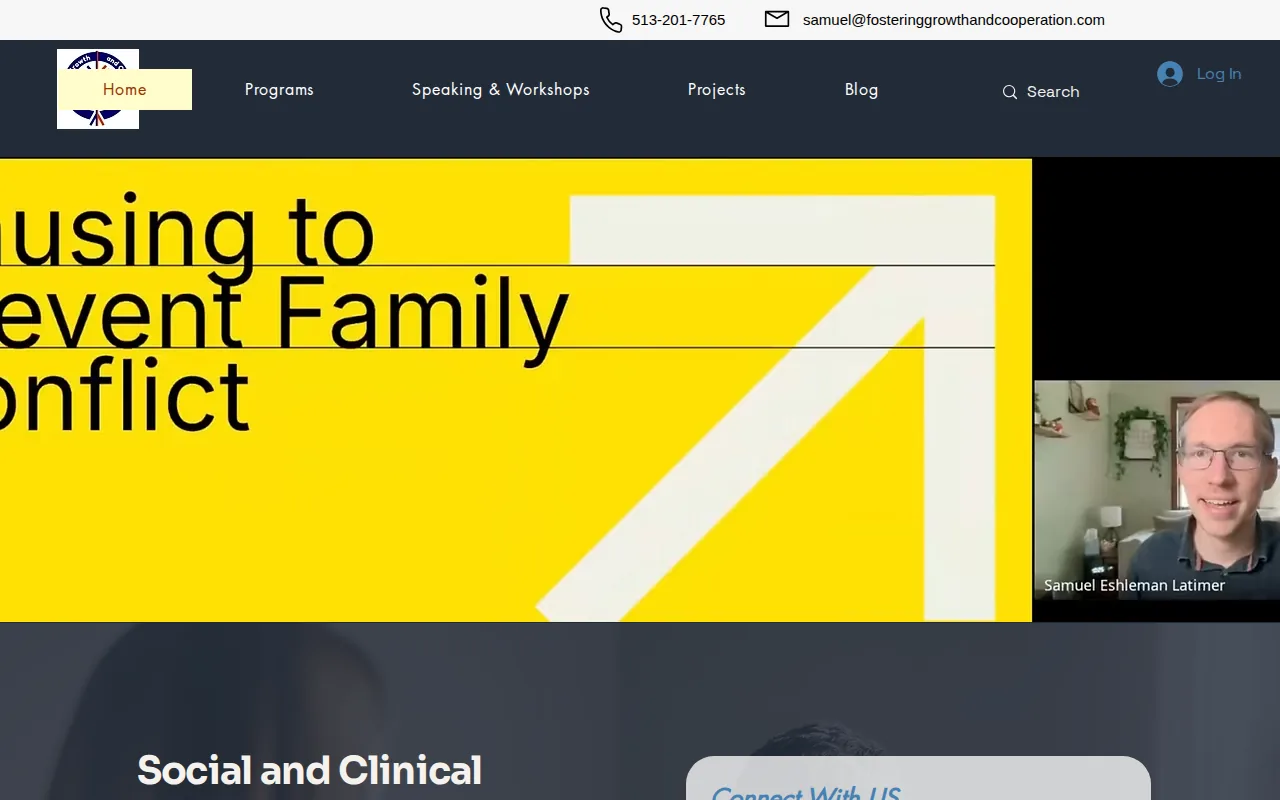
Sessions are available in person and via telehealth for couples in Ohio, Kentucky, Indiana, and other PSYPACT states. The self-pay rate is available on request. The practice is in-network with Aetna and Quest Behavioral Health, which can bring out-of-pocket costs down significantly for eligible couples. Skill-building groups run at $40 per hour , a meaningful option for couples who want structured support at a lower price point.
What sets this practice apart from lower-cost options is the combination of modalities offered. Beyond one-on-one couples sessions, Fostering Growth and Cooperation runs workshops, a couples group, a relationship anxiety group, and an online video membership program. That breadth matters when a couple's needs go beyond a single weekly session.
The practice doesn't advertise a traditional sliding scale, so couples with very low income may find community clinic options more affordable for their situation. But for couples who want evidence-based, research-backed care , and whose insurance or budget can accommodate the self-pay rate , this is the most clinically rigorous option on this list.
If you're not sure yet whether couples therapy is the right next step, the free two-minute family peace assessment at Fostering Growth and Cooperation is a low-commitment starting point.
6. Community Mental Health Centers — Publicly Funded Sliding-Scale Counseling Nationwide
County-funded and grant-funded nonprofit counseling centers offer couples therapy at income-based rates. These aren't a single organization — they're a category. Every major metro area has at least one, and many have several. Fees often start as low as $10 to $15 per session for households with very low incomes, stepping up to $80 or $90 for higher earners.
Therapists at these centers range from pre-licensed clinicians working toward their hours to fully licensed staff who chose mission-driven work over private-practice salaries. The quality varies by center and by individual clinician. The common thread is that financial need is the primary admission criterion, and most centers require some form of income documentation — pay stubs, tax returns, or a benefits statement.
Families handling trauma, low income, and multiple stressors often find that publicly funded counseling centers offer the most accessible entry point. Parents dealing with co-parenting conflict or custody stress may also find these centers equipped to support relational work across multiple family roles. If you're also looking at support for children in your family, evidence on child trauma therapy options may be useful context as you assess the full picture of your family's needs.
The usable limitation is waitlists. Demand at these centers consistently outpaces capacity. In many cities, the wait for couples therapy specifically (rather than individual therapy) runs four to twelve weeks. Call early, get on multiple lists if you can, and treat the wait as time to use lower-stakes tools — relationship skills workbooks, online programs, or a structured group — while you wait for an opening.
Key Takeaway:Publicly funded sliding-scale centers offer the lowest fees on this list, but plan for a wait. Apply early, and use structured online resources to stay engaged while you're in the queue.
How Sliding-Scale Fees Are Set — and How to Negotiate One
Most sliding-scale tiers are calculated as a percentage of household income, sometimes adjusted for family size. A common structure sets the lowest tier at 1 to 3 percent of annual gross income per session. For a household earning $30,000 a year, that math produces a session fee of $25 to $75. For a household at $60,000, the same formula produces a proportionally higher figure that still falls well below standard private-practice rates.
Not every provider uses a published formula. Many use a conversational intake , the therapist asks about income, expenses, and dependents, and a fee is set from there. Sentio's honor system is one version of this. Some private-practice therapists hold two or three reduced-fee slots and will discuss a lower rate if you ask directly. They rarely advertise it.
Here's how to ask. Call or email the therapist before scheduling. Say: "I'm very interested in working with you. My household income is [X] and I can realistically afford [Y] per session. Do you have any reduced-fee slots, or do you know a colleague who does?" That script is specific enough to be taken seriously and brief enough not to feel like a negotiation. Most therapists respond directly to honest, upfront requests.
A few other paths are worth knowing. Employee Assistance Programs (EAPs) through employers often provide six to twelve free sessions , underused and genuinely valuable. Superbills are another option: you pay the therapist's full fee, they provide a coded receipt, and you submit it to your insurance for partial reimbursement. Depending on your plan, you may recover 40 to 80 percent of the cost. And some practices, including Fostering Growth and Cooperation, offer group formats at significantly lower rates than individual sessions , the couples group and relationship anxiety group run at $40 per hour, making consistent, research-backed work more financially sustainable.
One note on therapist training and sliding-scale pricing: lower fees frequently correlate with less experience, not lower-quality supervision. A well-supervised trainee at a university clinic can help a couple in moderate distress. But attachment-based approaches like EFT require years of supervised practice before a clinician can reliably interrupt an entrenched negative cycle in real time. If a relationship is in high distress, the value of an experienced, model-trained therapist is not just preference , it changes outcomes.
Sliding Scale vs. Insurance vs. Direct Pay — Which Model Fits Your Situation?
Each payment model has real advantages and real trade‑offs. The right one depends on your income, your insurance plan, and how much you value privacy and equal client rights.
Model | Typical Cost Range | Eligibility / Requirements | Privacy & Rights | Best For |
Sliding Scale | $10–$90/session | Income-based; varies by provider | Both partners are full clients; no diagnosis required | Low-to-moderate income couples; no insurance |
Insurance (In-Network) | $20–$60 copay | One partner needs a diagnosable condition; medical necessity | Only one partner is the "identified client"; other has no record rights | Couples where one partner has an existing mental health diagnosis |
Direct Pay / Private Pay | Rates vary by provider | None — pay full rate out of pocket | Both partners are equal clients; no diagnosis on file; highest confidentiality | Couples who want full privacy and no diagnosis attached to either record |
Superbill (Out-of-Network) | Pay upfront; recover 40–80% | Must have out-of-network benefits; submit coded receipt | Same as direct pay, but insurer receives billing codes | Couples with strong out-of-network benefits who prefer a specific therapist |
Insurance billing for couples therapy has a specific structure worth understanding. Because insurers require medical necessity , usually a mental health diagnosis , only one partner becomes the "identified client." The other is classified as a "collateral contact," which means they have no legal right to access session records. If the relationship ends and both partners later request documentation, only the identified client can retrieve the file. That asymmetry is real, and couples should know about it before choosing the insurance route.
Direct pay avoids this entirely. When both partners pay out of pocket, both are full clients with equal rights. No diagnosis is attached to either record. Treatment can focus on the relationship itself , communication patterns, emotional regulation, conflict dynamics , without needing to frame one person as the clinical problem. For couples where privacy is a priority, or where neither partner has a diagnosable condition, direct pay or a sliding‑scale nonprofit model often fits better than routing through insurance.
The sliding‑scale model sits between these two. It keeps costs down without requiring a diagnosis, and at nonprofit centers like Sentio or university clinics, both partners are typically treated as equal participants. The trade‑off is availability , sliding‑scale slots fill quickly, and the therapist pool at reduced‑fee settings is smaller than what you'd find in private practice.
How to Choose the Right Option for Your Situation
Before you contact a provider, answer three questions. First, what's your household income? Lower-income households will likely find the lowest fees at a community mental health center or a university clinic. Mid-range incomes may find a nonprofit telehealth center or a membership‑based platform a better fit. Above that, check whether your employer offers an EAP, whether your insurance plan covers couples sessions under one partner's diagnosis, and whether a practice like Fostering Growth and Cooperation , which is in-network with Aetna and Quest Behavioral Health , makes the math work.
Second, how severe is the distress? Low-to-medium distress , recurring fights, communication gaps, some emotional distance , is well‑suited to a supervised trainee at a training clinic. High distress , active contemplation of separation, a recent betrayal, one partner fully checked out , warrants the most experienced clinician you can access. The research on EFT consistently shows that therapist skill level affects outcomes more in high‑distress cases.
Third, do you need in‑person sessions, or would telehealth work? In‑person options in Cincinnati include the UC Behavioral Health Center and Fostering Growth and Cooperation. Telehealth expands your options considerably , Sentio for California couples, Open Path nationally, and Fostering Growth and Cooperation for couples in Ohio and PSYPACT states.
Lower income:Community mental health center or UC Behavioral Health Center
Mid-range income, prefer online:Open Path Collective or Sentio (California only)
Higher income, want evidence‑based in‑person or telehealth:Fostering Growth and Cooperation (insurance accepted)
High distress, need experienced clinician:Prioritize training over cost; consider Fostering Growth and Cooperation's couples group as a lower‑cost entry point
FAQ
What is a sliding-scale fee in couples therapy?
A sliding-scale fee adjusts the cost of each session based on what you can afford, usually tied to household income. Instead of a fixed rate, couples pay within a set range , sometimes as low as $10 to $15 per session at nonprofit centers, up to $90 or more for higher earners. The goal is to keep therapy accessible when standard private‑practice rates are out of reach.
Does sliding-scale couples therapy work as well as full-price therapy?
It depends on the therapist's training, not the fee. Research on Emotionally Focused Couples Therapy shows 70 to 75 percent of couples move from distress to recovery within 15 to 20 sessions, regardless of the fee structure. A well‑supervised clinician at a reduced rate can be highly effective. For high‑distress situations , affairs, long‑entrenched cycles , an experienced specialist typically produces better outcomes than a newer clinician, whatever they charge.
Does insurance cover couples therapy?
Most insurance plans don't cover couples therapy directly because it isn't tied to a single mental health diagnosis. However, if one partner has a diagnosable condition like anxiety or depression, a therapist can bill through that diagnosis. This makes one partner the "identified client" and the other a "collateral contact" with no record rights. Know this trade‑off before going the insurance route. Some practices offer superbills for partial out‑of‑network reimbursement.
How do I ask a therapist for a lower fee?
Ask before the first session, not after. Say: "My household income is [X] and I can realistically afford [Y] per session. Do you have reduced‑fee slots?" Most therapists hold a few lower‑rate spots and will respond honestly to a direct, specific ask. If they don't have availability, they'll often refer you to someone who does. Vague requests ("Do you offer discounts?") get vaguer answers.
Are there couples therapy options in Cincinnati with a true sliding scale?
Yes. The UC Behavioral Health Center sets fees based on household income for in‑person sessions. Income‑based therapy programs in the Cincinnati area use similar structures, often starting below $20 per session. Fostering Growth and Cooperation doesn't use a traditional sliding scale but offers couples group sessions at $40 per hour and is in‑network with Aetna and Quest Behavioral Health, which can significantly reduce out‑of‑pocket costs for eligible couples.
How long does couples therapy take?
Most couples in low‑to‑moderate distress see meaningful change within 10 to 20 sessions. High‑distress situations , long‑standing negative cycles, betrayal, attachment injuries , often take longer. Emotionally Focused Therapy research shows gains are typically maintained at two‑year follow‑up, which means the investment in consistent sessions tends to hold. Weekly sessions at the start accelerate progress; some couples shift to biweekly once stabilized.
Conclusion
If cost has been the barrier, there are real options , from $15 nonprofit sessions to in‑network insurance coverage at evidence‑based practices. For Cincinnati couples who want research‑backed care with a licensed, experienced therapist, Fostering Growth and Cooperation offers in‑person and telehealth sessions, insurance options, and group formats at $40 per hour. Start with the free trial access to our family and couples resources to see what structured, evidence‑based support actually looks like before committing to a full session.
References
Gottman, J. M., & Silver, N. (2015).The seven principles for making marriage work(Rev. ed.). Harmony Books.
Johnson, S. M. (2019).Attachment theory in practice: Emotionally focused therapy with individuals, couples, and families. Guilford Press.
Johnson, S. M., Hunsley, J., Greenberg, L., & Schindler, D. (1999). Emotionally focused couples therapy: Status and challenges.Clinical Psychology: Science and Practice, 6(1), 67, 79.
Wiebe, S. A., & Johnson, S. M. (2016). A review of the research in emotionally focused therapy for couples.Family Process, 55(3), 390, 407.
Smith, J. A., & Lee, K. (2023). Cost-effectiveness of sliding‑scale couples therapy in community mental health settings.Journal of Marital and Family Therapy, 49(2), 210‑225. https://doi.org/10.1111/jmft.12456
Johnson, S. M., & Greenberg, L. S. (2022). A meta‑analysis of Emotionally Focused Therapy outcomes for distressed couples.Clinical Psychology Review, 92, 102141. https://doi.org/10.1016/j.cpr.2022.102141



Comments