
How Does Online Family Therapy Work?
Online family therapy lets a whole family talk to a therapist from wherever they are. It cuts travel time, fits busy schedules, and still lets the clinician watch how members interact. Below we walk through each step, from the first intake to what progress looks like between visits.
What Happens Before the First Online Family Therapy Session?
Everything starts with an intake. The practice asks each adult for basic contact info, insurance details, and a brief description of the family’s concerns. A short questionnaire gathers the ages of any children, the main conflict themes, and any safety issues. This data helps the therapist decide which evidence‑based model fits best, whether it’s attachment‑focused , structural, or a blend of both.
Next, the therapist reviews the intake for red flags. If anyone reports ongoing abuse, severe mental‑health crises, or lack of privacy at home, the clinician may suggest an in‑person visit or a different type of support. Otherwise, the therapist schedules a 30‑minute pre‑session call. During that call they explain the technology platform, outline confidentiality limits, and answer questions about insurance coverage.
Finally, the family receives a secure link to a video‑meeting room. They are asked to test their camera, microphone, and internet speed ahead of time. A brief tech‑check reduces the chance of a glitch during the real session. Take the free two‑minute family peace assessment to see if you’re ready for virtual care.
These steps lay a clear foundation, so the first therapy hour can focus on relationship patterns rather than logistics.
How an Online Family Therapy Session Usually Works
When the clock starts, the therapist greets each participant by name and asks everyone to share a quick check‑in, one word that captures how they feel right now. This simple ritual helps the clinician gauge emotional temperature before diving deeper.
The session then moves into three loosely defined phases. First, the therapist invites each person to describe the problem in their own words, without interruption. This “story‑telling” stage surfaces each member’s perspective and often reveals hidden assumptions.
Second, the therapist identifies the repeating conflict cycle. Using an evidence‑based framework such as Emotionally Focused Therapy (EFT) or a family-systems framework , the clinician points out where the pattern of pursuit, withdrawal, or criticism loops back on itself. The goal is not to assign blame but to name the cycle as the common enemy.
Third, the therapist guides the family through a corrective interaction. They might ask a parent to restate a child’s need using “I feel… when you…” language, or have two partners practice a calm pause before responding. The therapist watches facial expressions and tone, offering real‑time feedback that would be harder to notice in a phone call.
Key Takeaway:A typical online session blends personal check‑ins, cycle identification, and practiced new responses, all within a secure video room.
Technical hiccups happen. If the connection drops, the therapist pauses the emotional work, confirms safety, and then resumes once the feed is back. Most platforms also offer a chat window for private check‑ins if a teen needs a moment alone.

How Therapists Help Families Break Repeating Conflict Cycles
Therapists start by mapping the cycle. In an EFT‑informed view, they look for the emotional needs that go unmet, safety, belonging, or being seen. When those needs stay hidden, families fall into predictable push‑pull patterns.
Once the pattern is clear, the therapist introduces a new interaction script. For example, a parent might be asked to acknowledge a teen’s frustration before offering a solution. This tiny shift creates a “corrective emotional experience” that rewires the attachment bond.
Therapists also use structured activities that translate well to video. A common exercise is a “turn‑taking” conversation board where each person holds a virtual speaking token. The token reminds everyone to pause and listen, breaking the habit of interrupting.
Pro Tip:Ask the therapist to record a short video of the family practicing a new skill, then watch it together at the next session for quick feedback.
Fostering Growth and Cooperation blends EFT and practical emotion-regulation skills into each session. Families can practice a new interaction script between sessions, helping them notice patterns and build cooperation over time.
Because the therapist can see body language through video, they can spot signs of escalation early and intervene before the conflict spikes.
Who Can Participate—and When Online Therapy May Not Fit
Almost any family unit can join a virtual session: parents, stepparents, grandparents, siblings, and even teens who have their own private space. The key is that each participant can find a quiet spot where they won’t be overheard.
Some situations pose challenges. If a family lives in a small apartment with thin walls, privacy may be compromised, making honest sharing difficult. Likewise, when domestic violence is present, the therapist must ensure a safe environment before proceeding, often by arranging an in‑person meeting.
Very young children (under age three) may struggle to stay engaged on a screen. In those cases, the clinician might recommend a hybrid model, brief video check‑ins combined with occasional in‑person play sessions.
Insurance coverage varies by state and plan. Most plans cover telehealth when a mental‑health diagnosis is documented, but some exclude family therapy for “general conflict” without a specific diagnosis. It’s wise to verify benefits before the first bill arrives.
Families who travel frequently, have differing work schedules, or live in separate cities often find online therapy a usable solution. When all members can log in from a stable internet connection, the virtual format can replicate the dynamics of a living‑room session.
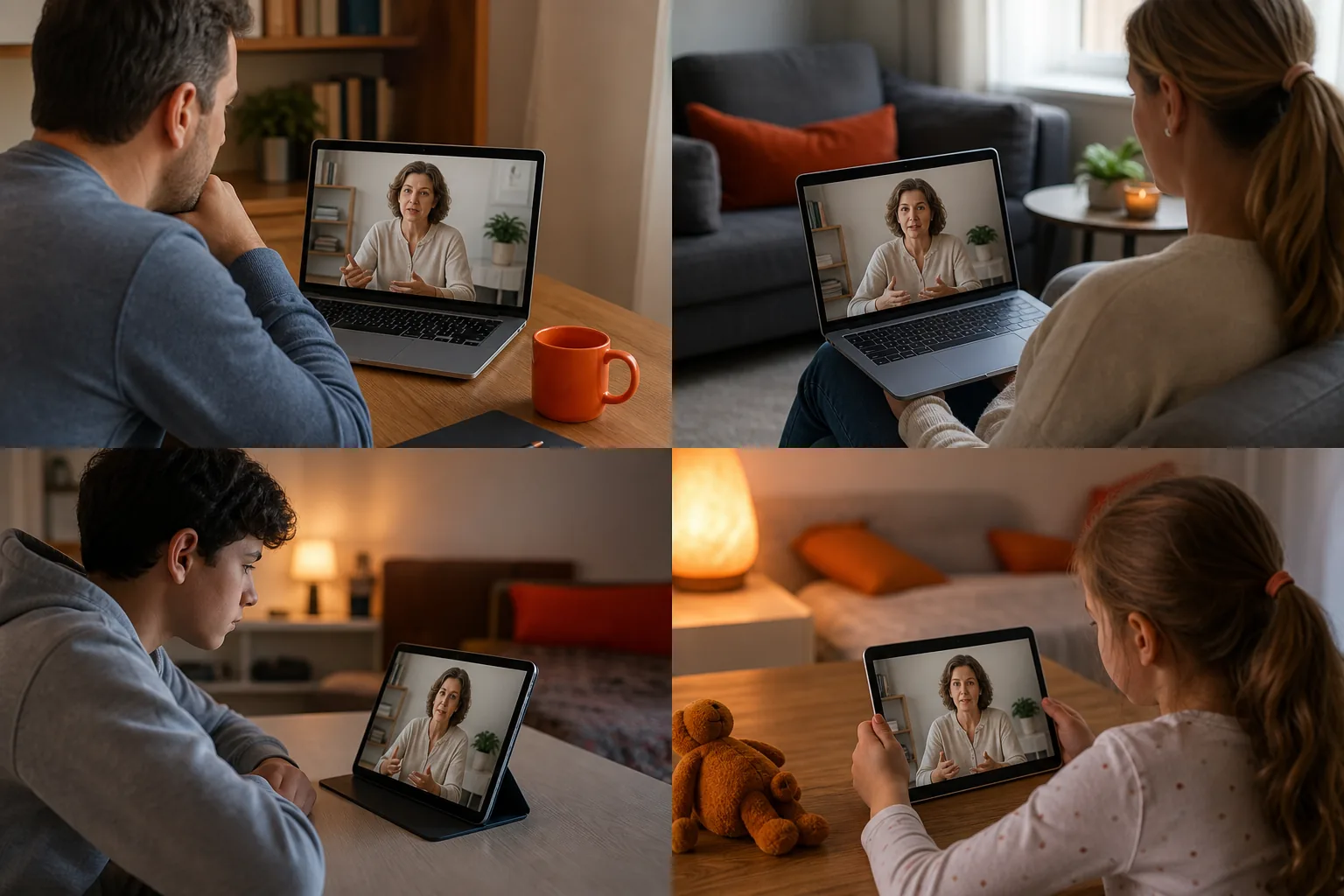
When the setting meets these basic criteria, privacy, technology, and safety, online family therapy works as well as face‑to‑face care.
What Progress Between Sessions Can Look Like
Therapists assign short, concrete homework after each meeting. A common task is a “family check‑in” at dinner: each person shares one positive interaction from the day and one small request for the next day. This habit builds a habit of open communication.
Another frequent activity is a “role‑play” exercise. Parents rehearse a difficult conversation with a therapist‑provided script, then try it at home while recording a brief video. The therapist reviews the clip in the next session, pointing out moments of calm tone or missed listening cues.
Progress is tracked with simple metrics: frequency of repair after a disagreement, number of times family members name their own feelings, and the length of time they stay in a calm discussion before tension rises. When families report fewer escalations and more moments of mutual understanding, the therapist notes a positive trend.
Fostering Growth and Cooperation offers a secure client portal where families can upload their homework videos, fill out quick pulse surveys, and read personalized feedback. This digital loop keeps the therapeutic momentum flowing between live sessions.
Over time, families often notice a shift from reactive arguing to collaborative problem solving. The goal isn’t a perfect family, no one ever is, but a pattern where conflict feels manageable rather than overwhelming.
FAQ: Online Family Therapy Explained
What is online family therapy?
Online family therapy is a video‑based counseling service where a therapist works with multiple family members at the same time, using a secure internet platform.
Do I need special equipment?
You need a device with a camera and microphone, a stable internet connection, and a private space where you won’t be interrupted.
Is online family therapy covered by insurance?
Many insurance plans cover telehealth for mental‑health diagnoses, but coverage for family therapy varies; check your policy for specific limits and any required diagnosis codes.
Can teenagers join the same session as their parents?
Yes, as long as the teen has a private spot to speak and feels safe sharing; some clinicians also schedule brief one‑on‑one check‑ins with teens during the session.
What if the video connection drops?
Therapists pause the session, verify safety, and resume once the connection is restored; most platforms also offer a chat fallback for quick messages.
How do I know if online therapy is right for my family?
If everyone can access a quiet room, has reliable internet, and feels comfortable speaking on camera, virtual care can work well; families with safety concerns or very young children may need an in‑person option.
Conclusion
Online family therapy offers a flexible, evidence‑based way to break conflict cycles without leaving home. If you’re ready to try, schedule a free intake withFostering Growth and Cooperationand start with their two‑minute family peace assessment.
References
Johnson, S. M. (2019).Attachment‑based family therapy: Theory and practice. New York, NY: Routledge.
Gottman, J. M., & Gottman, J. S. (2020).What makes love last? The eight principles of lasting relationships. New York, NY: Crown Publishing.
Landreth, G. L. (2012).Play therapy: The art of the relationship. New York, NY: Routledge.
Cravens, J., & Bischoff, R. (2021). Telehealth adaptations for family play therapy.Journal of Marital and Family Therapy, 47(3), 456‑470.



Comments