
Understanding Cognitive Behavioral Therapy for Social Anxiety Disorder
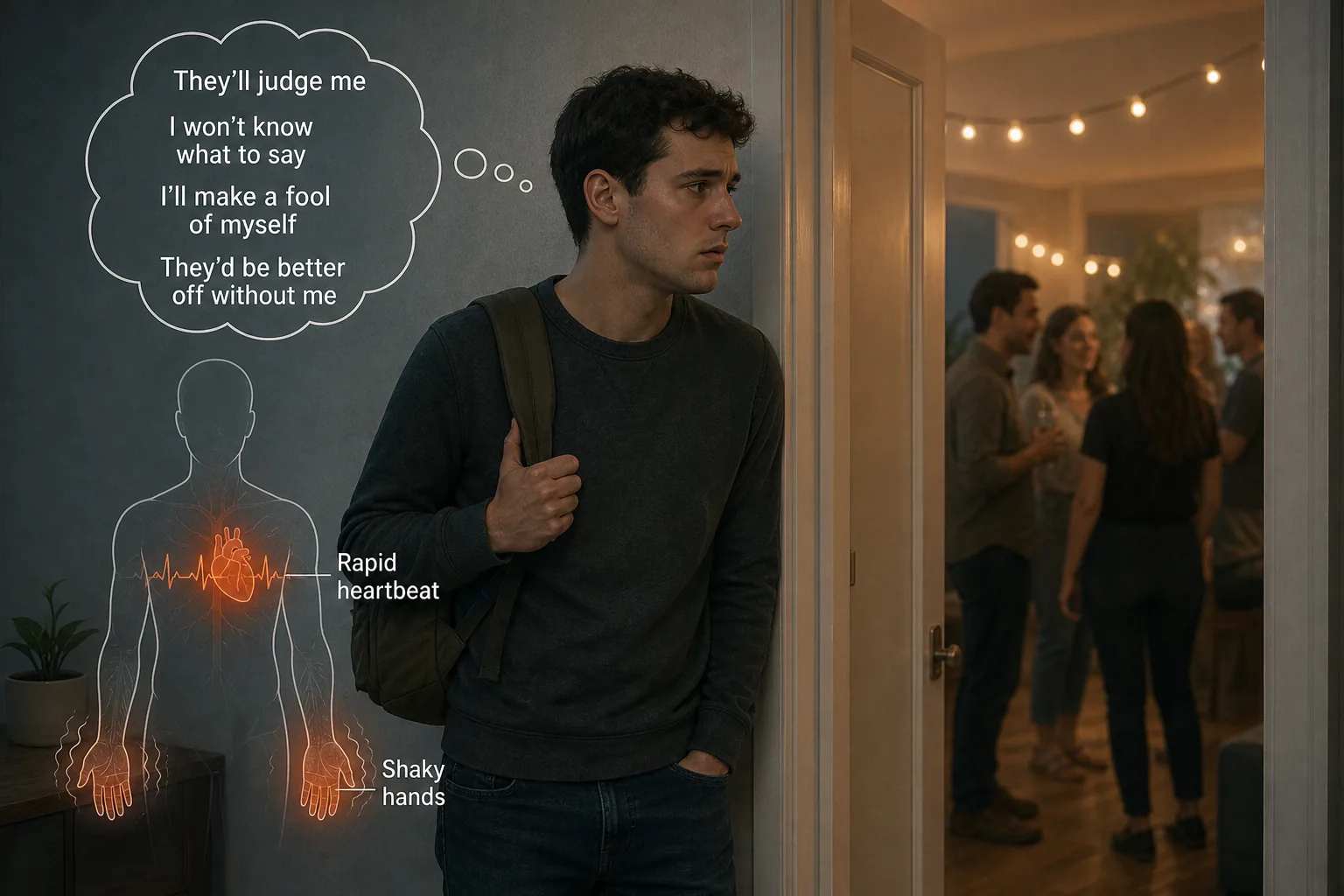
Social anxiety can feel like a wall that blocks you from everyday life. It’s not just shyness, it’s a real fear of judgment that can keep you stuck. Below we break down what cognitive behavioral therapy does for social anxiety, how it works, and what to expect.
What CBT Means for Social Anxiety Disorder
Social anxiety disorder (SAD) is marked by intense fear of being judged in social or performance situations. People with SAD often avoid events, or endure them with heavy anxiety. The disorder affects roughly 5‑13 % of adults over a lifetime. CBT aims to change the thoughts and behaviors that keep the fear alive.
In CBT the therapist helps you spot distorted thoughts, like “If I speak, everyone will think I’m dumb.” Then you learn to test those thoughts against evidence and replace them with more balanced ideas. The approach also includes gradual exposure to feared situations, so anxiety weakens over time.
Our practice, Fostering Growth and Cooperation , offers CBT that blends evidence‑based techniques with an eye toward the relational patterns that fuel shame. We work from our Bellevue, KY office and via telehealth in states where Dr. Samuel Eshleman Latimer is licensed.
Read more about how CBT is used for other anxiety types in Understanding CBT for Generalized Anxiety Disorder . That page shows the shared skills you’ll see in SAD work as well.
How the Social Anxiety Cycle Can Maintain Fear
When a person with SAD anticipates a social event, a cascade of thoughts, feelings, and behaviors begins. The mind predicts negative evaluation, the body reacts with sweating and rapid heartbeat, and the person often avoids the event. Avoidance prevents any chance to disconfirm the fear, so the belief stays strong.
Research highlights negative rumination, replaying the imagined embarrassment after an event, as a key factor that keeps the cycle going. Both pre‑event worry and post‑event rumination amplify anxiety, making it harder to break the pattern.
Because the cycle is self‑reinforcing, therapy targets each part: the thoughts, the physical response, and the avoidance behavior. By interrupting the loop, the fear loses its grip.
CBT Techniques Used to Examine Thoughts and Practice New Responses
CBT for SAD is built from a toolbox of techniques. Below are common ones:
Cognitive RestructuringSpot a distorted belief, test it against evidence, and craft a balanced alternative.
Thought RecordsFill a table that captures the situation, automatic thought, emotion, evidence for/against, and a new thought.
Behavioral ExperimentsTry a small action to see if the feared prediction comes true.
Gradual ExposureBuild a hierarchy of feared situations and face them step‑by‑step.
Behavioral ActivationSchedule pleasant activities to boost mood and reduce avoidance.
Downward‑Arrow TechniqueKeep asking “If that were true, what would it mean?” to reach core beliefs.
Self‑MonitoringKeep a log of negative thoughts to notice patterns.
Socratic QuestioningUse guided questions to treat thoughts as hypotheses, not facts.
Each skill is practiced in‑session and then assigned as homework. The therapist reviews your logs, offers feedback, and adjusts the plan.
Pro Tip:When you fill a thought record, start with the exact words you used in the moment. That makes the automatic belief clearer and easier to challenge.

These techniques work together. Cognitive restructuring changes the belief, exposure tests the belief in real life, and self‑monitoring keeps you aware of any slip‑backs.
What CBT Sessions May Involve and How Care Is Adapted
Typical CBT for SAD runs 10‑15 weekly sessions, each about 50 minutes. Early visits focus on psychoeducation, you learn how thoughts, emotions, and behavior interact. The therapist then introduces the toolbox of skills.
Later sessions shift toward exposure work. You’ll create a fear hierarchy, start with the least scary step, and gradually move up. Homework between sessions is essential; it’s how the brain rewires the fear response.
We tailor the pace to each client. If you prefer virtual meetings, we offer teletherapy in PSYPACT states where Dr. Latimer is authorized. In‑person work happens at our Bellevue, KY office, convenient for Cincinnati residents.
Read a step‑by‑step guide on structuring anxiety treatment in Evidence Based Anxiety Treatment: A Practical Guide . That page walks through goal‑setting, tracking, and adapting the plan.
Key Takeaway:CBT blends education, skill practice, and real-life exposure; the mix helps the fear lose power over time.
Who CBT May Help, Its Limits, and When to Seek Support
CBT works well for many adults who notice persistent fear of social judgment, avoidance of gatherings, or intense nervousness during speaking. It may also help teens who struggle with peer interactions.
However, CBT is not a magic fix. Some people find that their anxiety is linked to underlying trauma, severe depression, or medical conditions. In those cases, a combined approach with medication, care, or trauma‑focused therapy may be needed.
If you notice any of the following, consider seeing a medical professional right away: sudden panic attacks, thoughts of self‑harm, or physical symptoms that could signal a heart issue. Call 911 for emergencies or contact a local crisis service for mental‑health crises.
When you’re ready to explore CBT, you can start with our free two‑minute family peace assessment. It helps us see how anxiety fits into your broader relationships and whether CBT might be a good match. Begin the assessment at our assessment page .
Frequently Asked Questions
What is the typical length of CBT for social anxiety?
Most programs last 10‑15 weekly sessions, but the exact number depends on your goals and progress.
Do I need to do homework between sessions?
Yes. Practicing skills outside of therapy is how the brain learns new, less‑fearful patterns.
Can CBT be done online?
Yes, if you live in a state where Dr. Latimer holds a valid license. Virtual sessions follow the same structure as in‑person work.
Is medication required for CBT to work?
Medication is not required, but some people combine CBT with a prescriber’s advice to manage severe symptoms.
What if I feel worse after a session?
Some discomfort is normal when facing feared situations. If anxiety spikes dramatically or you feel unsafe, contact your therapist or call 988 for immediate help.
Conclusion
CBT offers a clear, evidence‑based path to loosen the grip of social anxiety. If the approach sounds like a fit, take the next step by completing our free assessment and seeing if we can tailor a plan for you.
References
Acarturk, C., Cuijpers, P., van Straten, A., & de Graaf, R. (2009). Psychological treatment of social anxiety disorder: A meta-analysis.Psychological Medicine, 39(2), 241-254.
American Psychiatric Association. (2022).Diagnostic and Statistical Manual of Mental Disorders (5th ed., text rev.).
Clark, D. M., & Wells, A. (1995). A cognitive model of social phobia. In R. G. Heimberg, M. R. Liebowitz, D. A. Hope, & F. R. Schneier (Eds.),Social phobia: Diagnosis, assessment, and treatment(pp. 69-93). Guilford Press.
Merck Manual Professional Version. (2026). Social anxiety disorder. Retrieved from https://www.merckmanuals.com/professional/psychiatric-disorders/anxiety-and-trauma-and-stressor-related-disorders/social-anxiety-disorder



Comments